With the Women
At first, I was there with my camera. But I quickly realised that I didn't want to stand on the outside and simply photograph them working. I wanted to know them.
The building
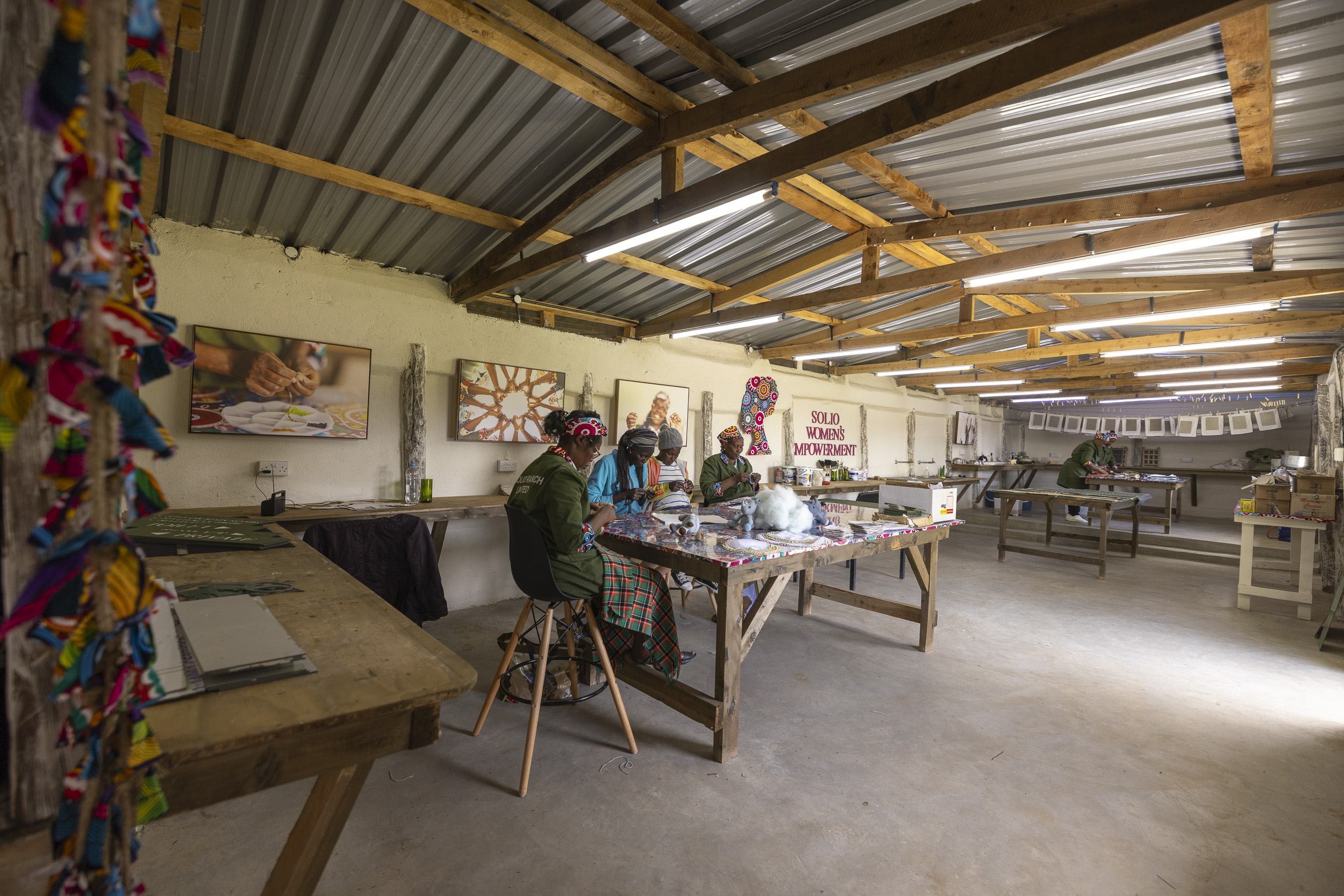
The first time I walked down to the Women's Empowerment Projects, the building itself already held memories for me.
Before it became what it is today, this was where some of Solio's first orphans had lived.
Njamba. Zawadi.
And Carissa, my favourite little impala.
I knew the place because of them.
Now the building had been given a completely different life.
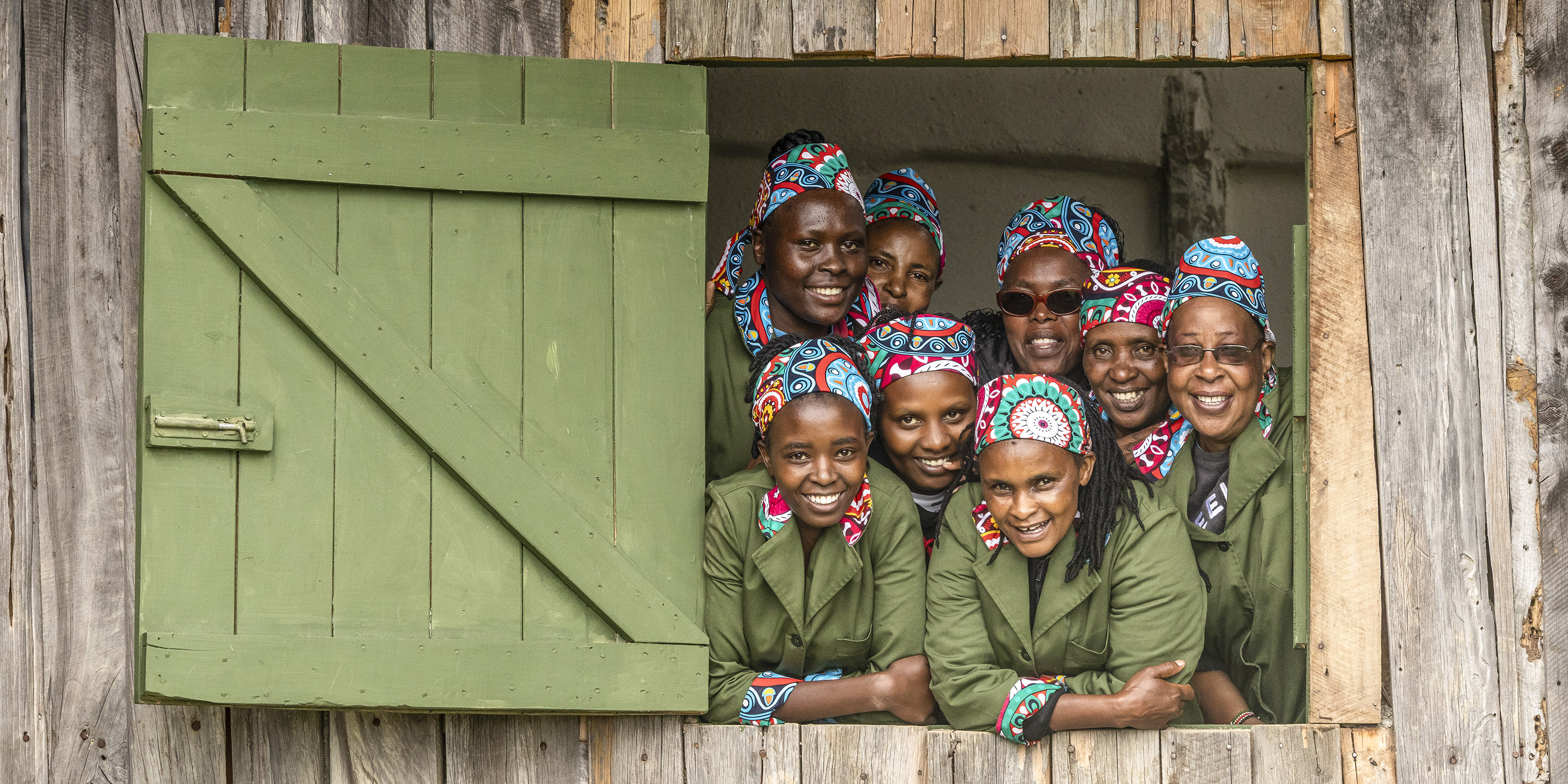
I walked in and met the women for the first time.
And honestly, their smiles get you immediately.
There was so much warmth in that room.
So I stayed.
We talked. We laughed. I watched what they were doing and started spending more time with them. Slowly, the camera stopped feeling like the reason I was visiting.
I didn't want to be there only as a photographer.
I wanted to be part of what was happening.
And somehow, that just happened naturally.
More ideas.
More things being made.
Every time I returned to Solio, the Women's Empowerment Projects became one of my first stops. And every time, there seemed to be more happening.
The team kept growing.
One of the things I love most is watching the women teach each other.
Many of them arrive without the skills they need to make the products. But someone else already knows how, so she teaches the next woman. And then that woman can pass it on again.
What they make
They are unbelievably fast learners.
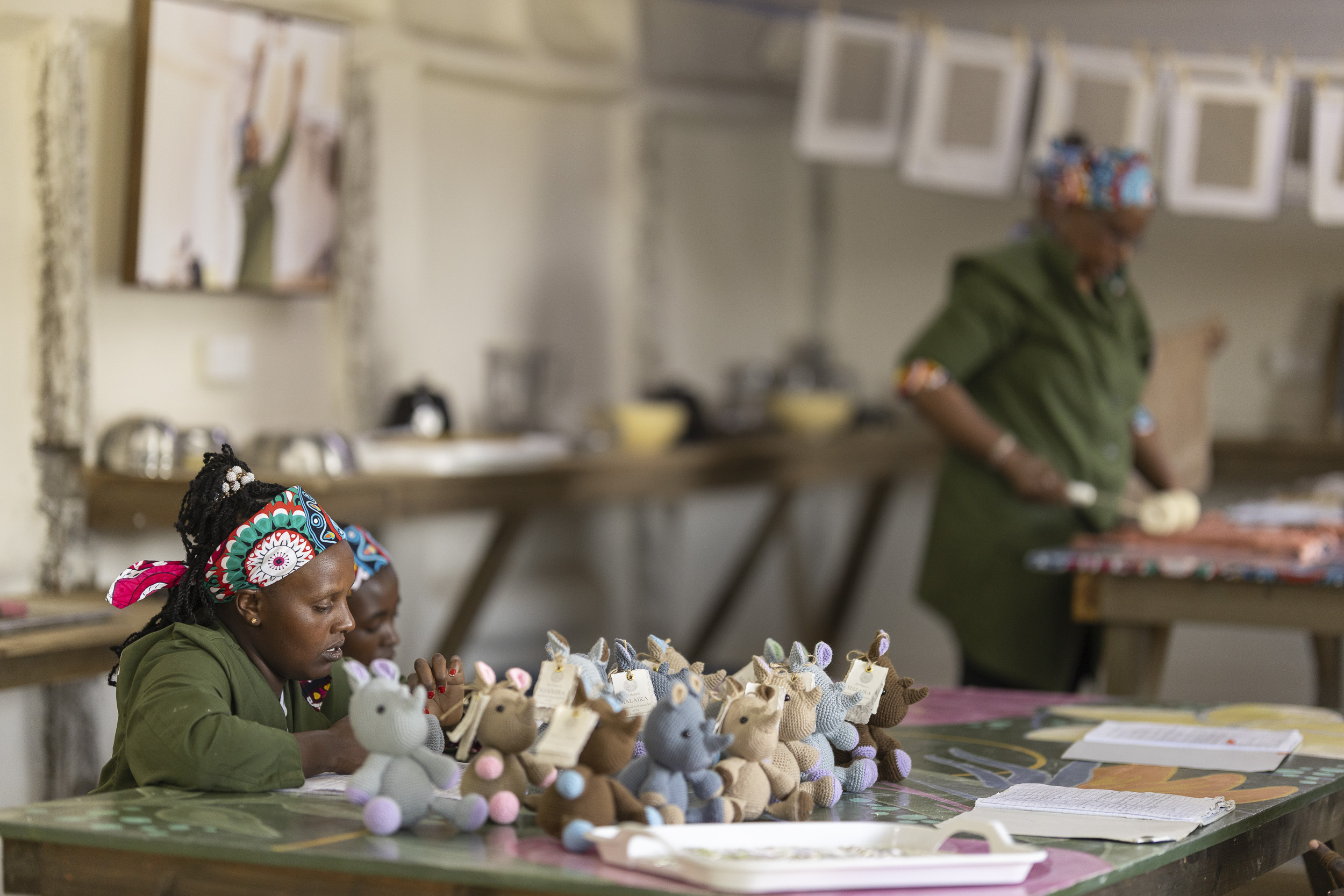
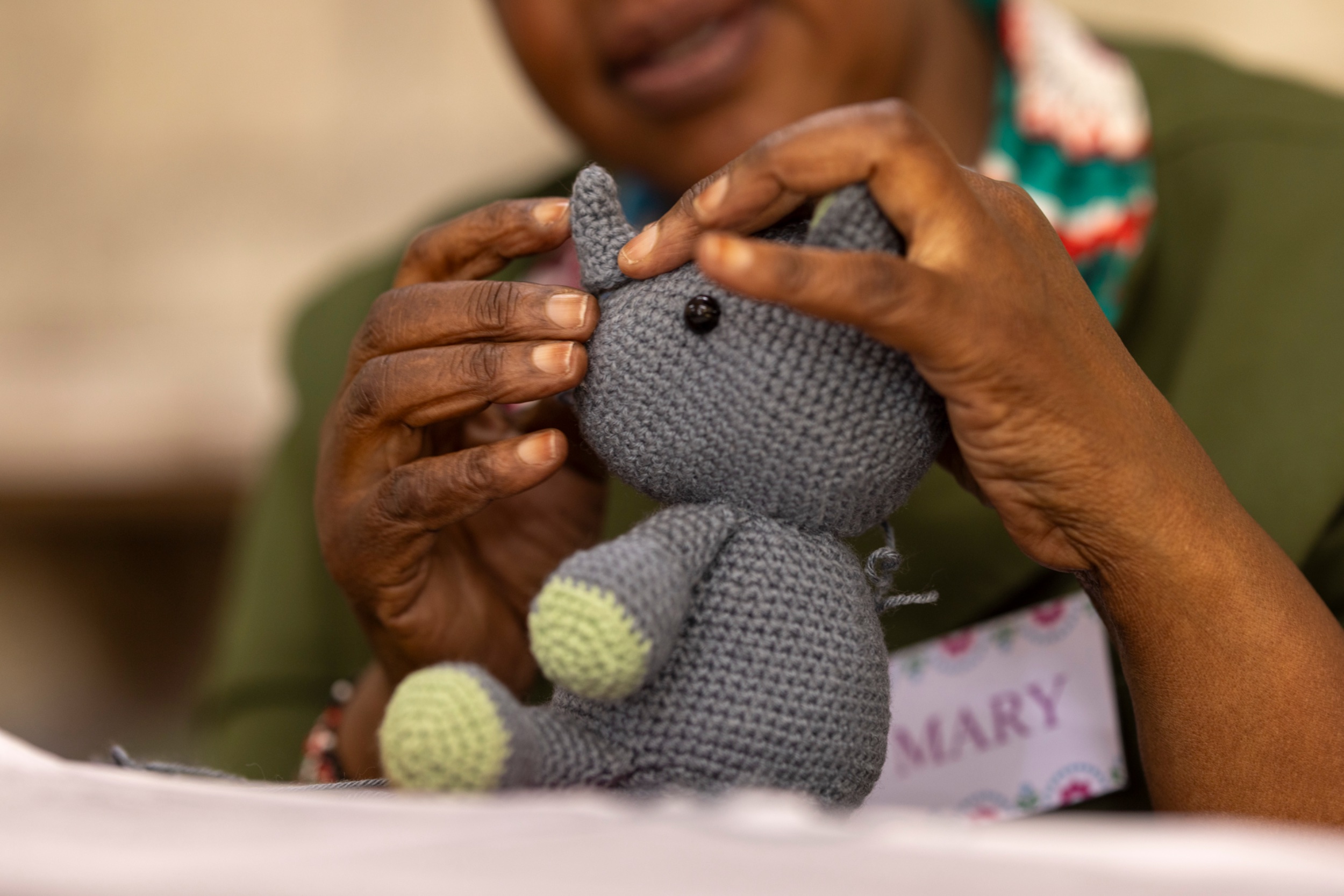
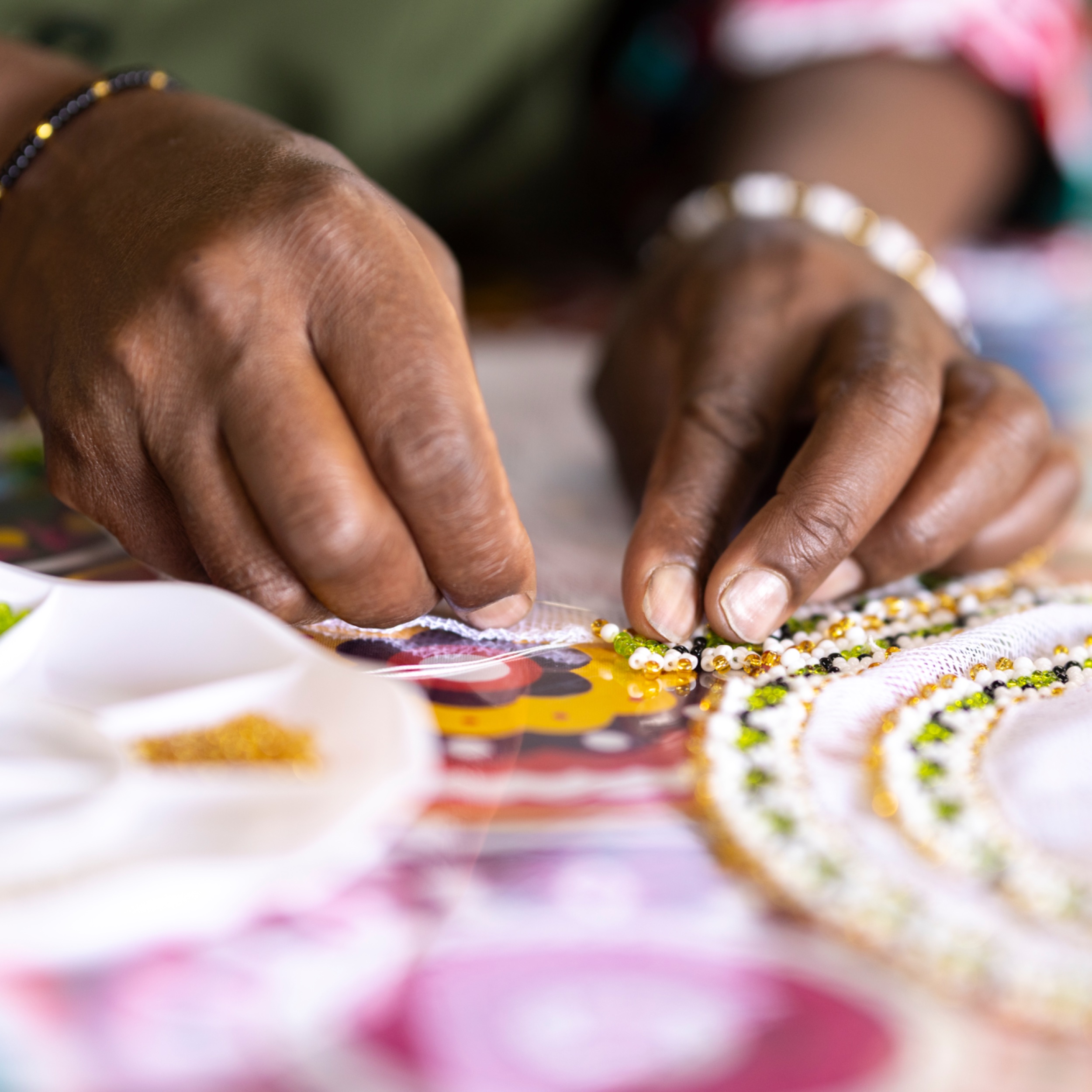
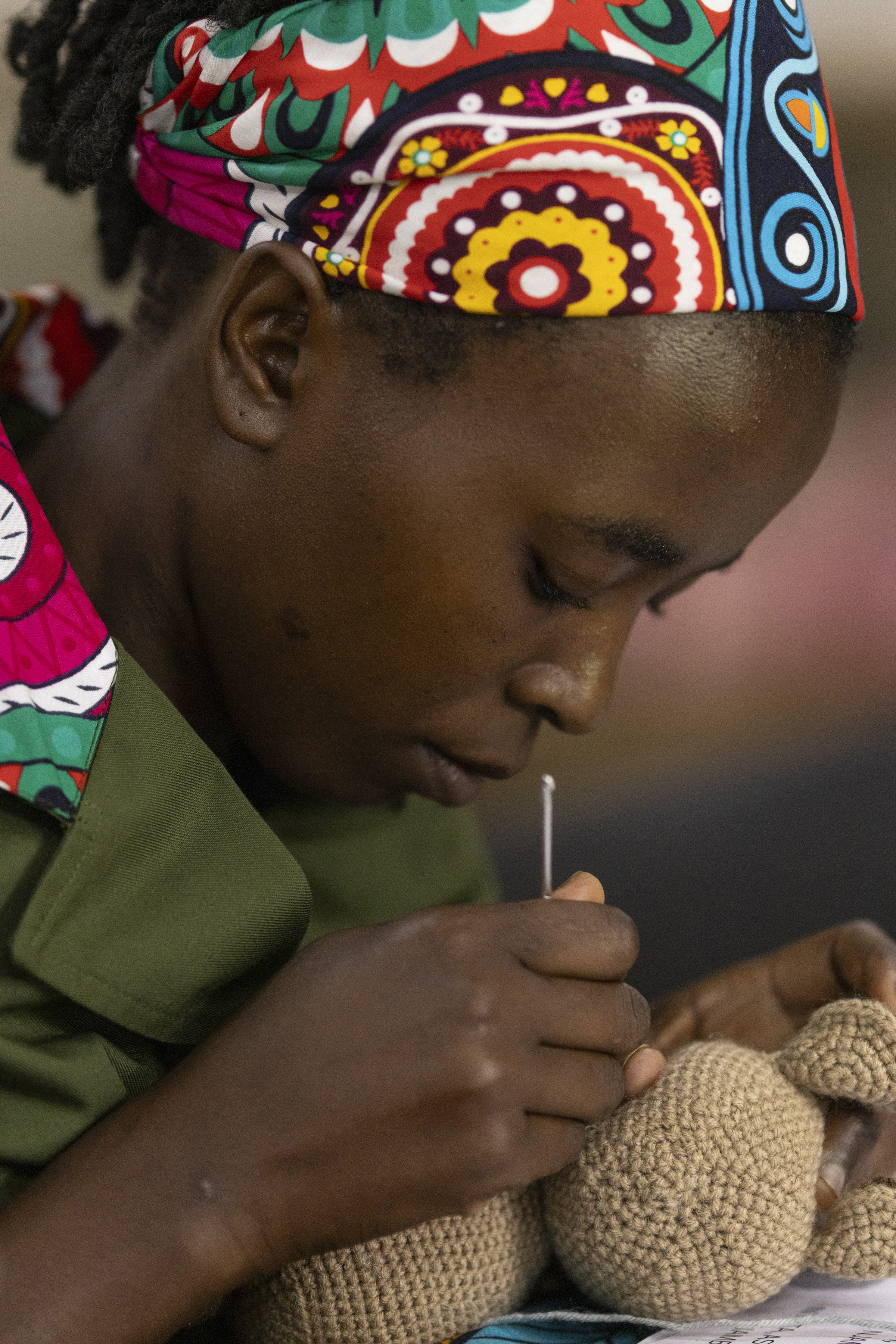
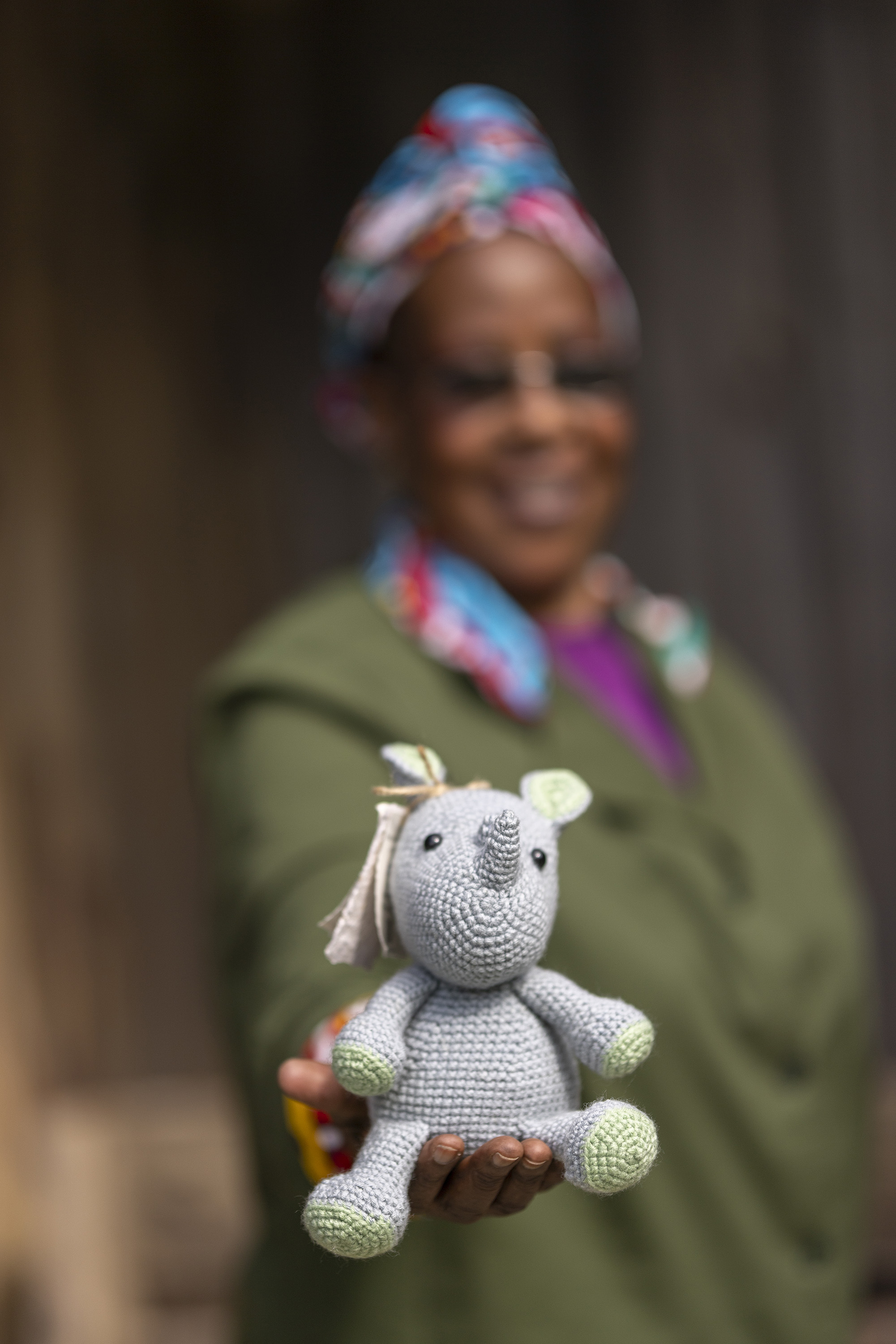
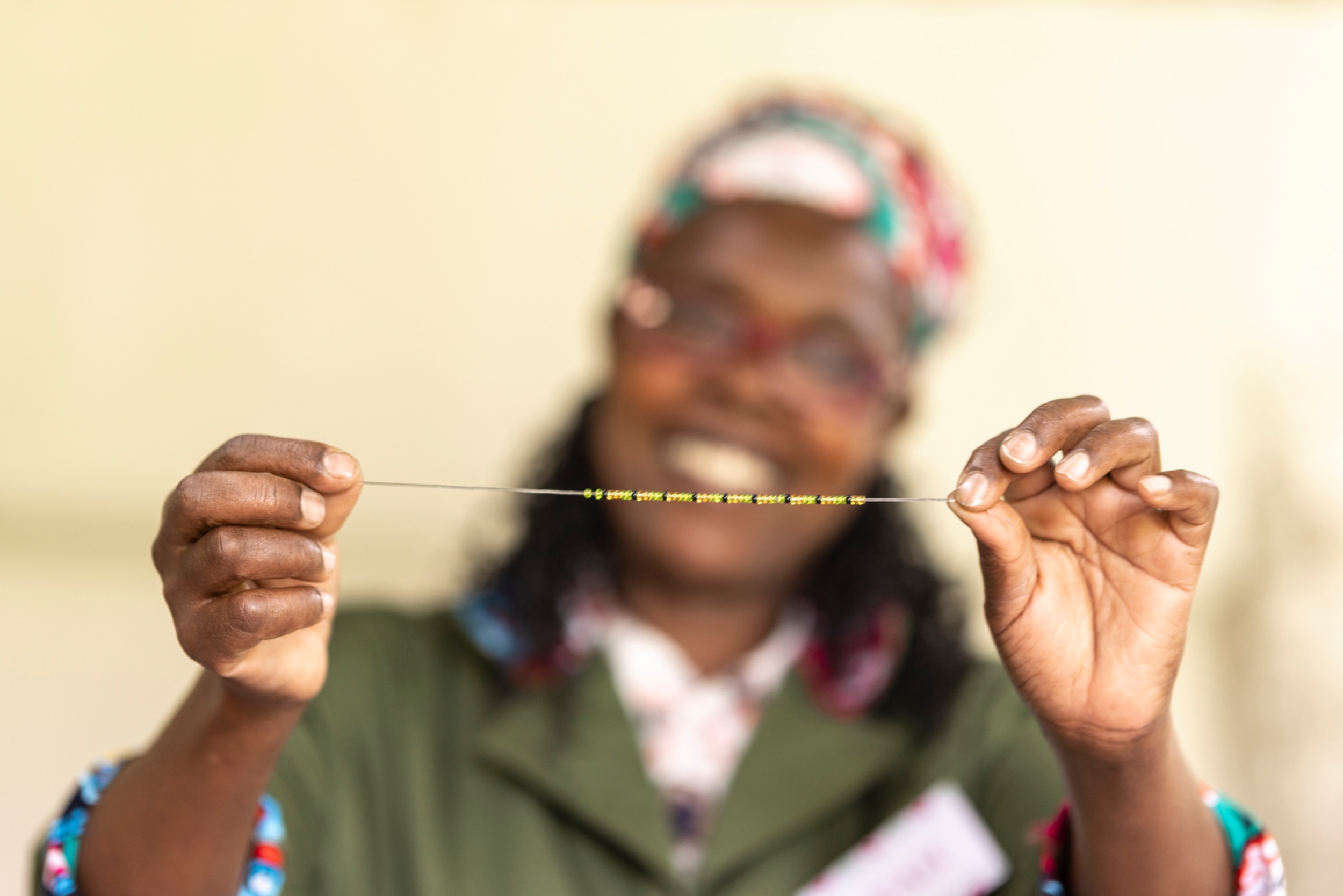
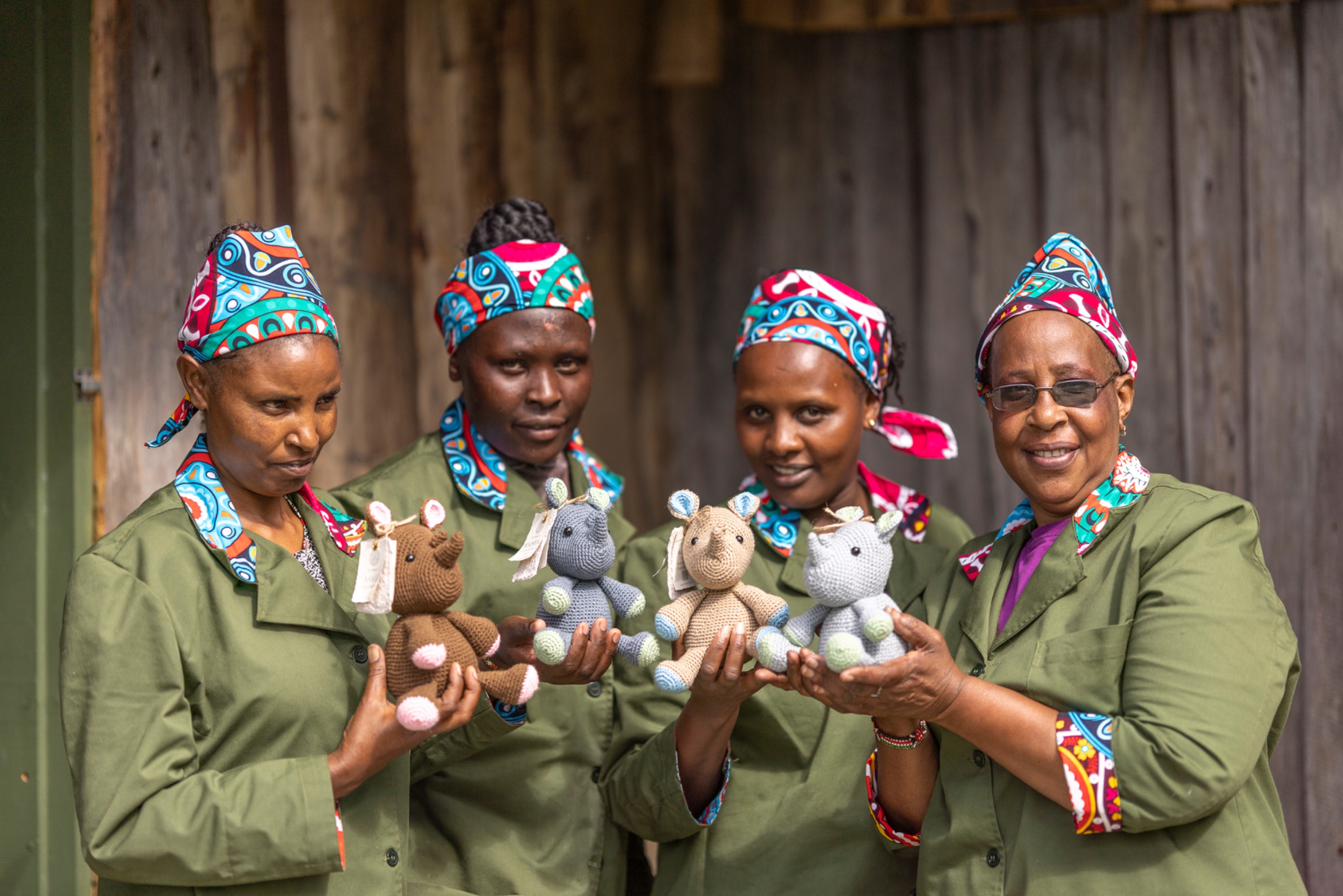
I remember watching them crochet the little rhinos, working from the notes they had taken while learning. There is beautiful beadwork too, including pieces now being made for the keys at the new JW Marriott at Solio.
They make handmade paper using recycled materials and even rhino dung.
The pads
The women sew reusable sanitary-pad kits for girls in the surrounding communities.
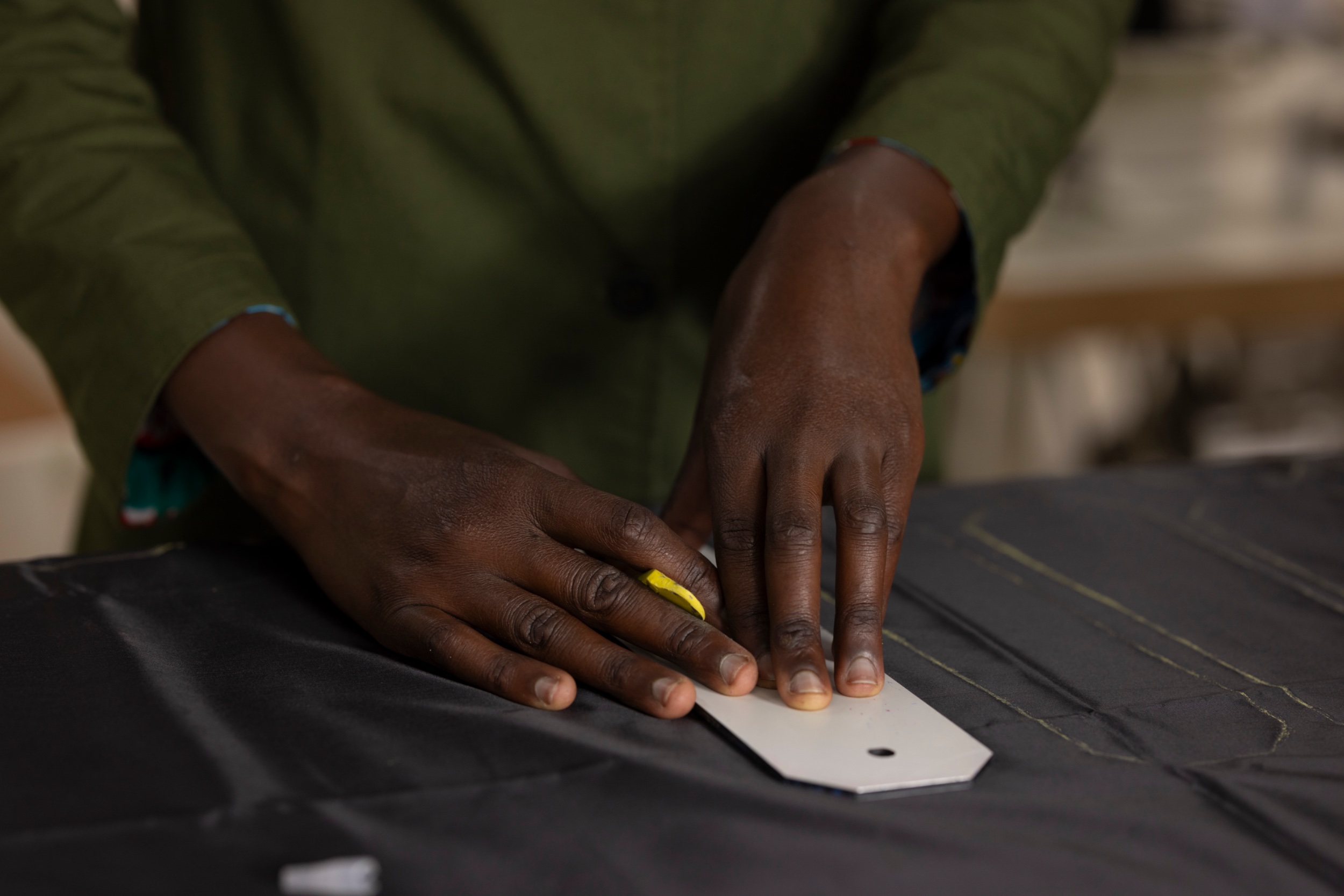
Each kit is made here by hand. The women trace and cut the fabric, sew the pieces together and prepare the finished pads before they are taken to the surrounding schools.
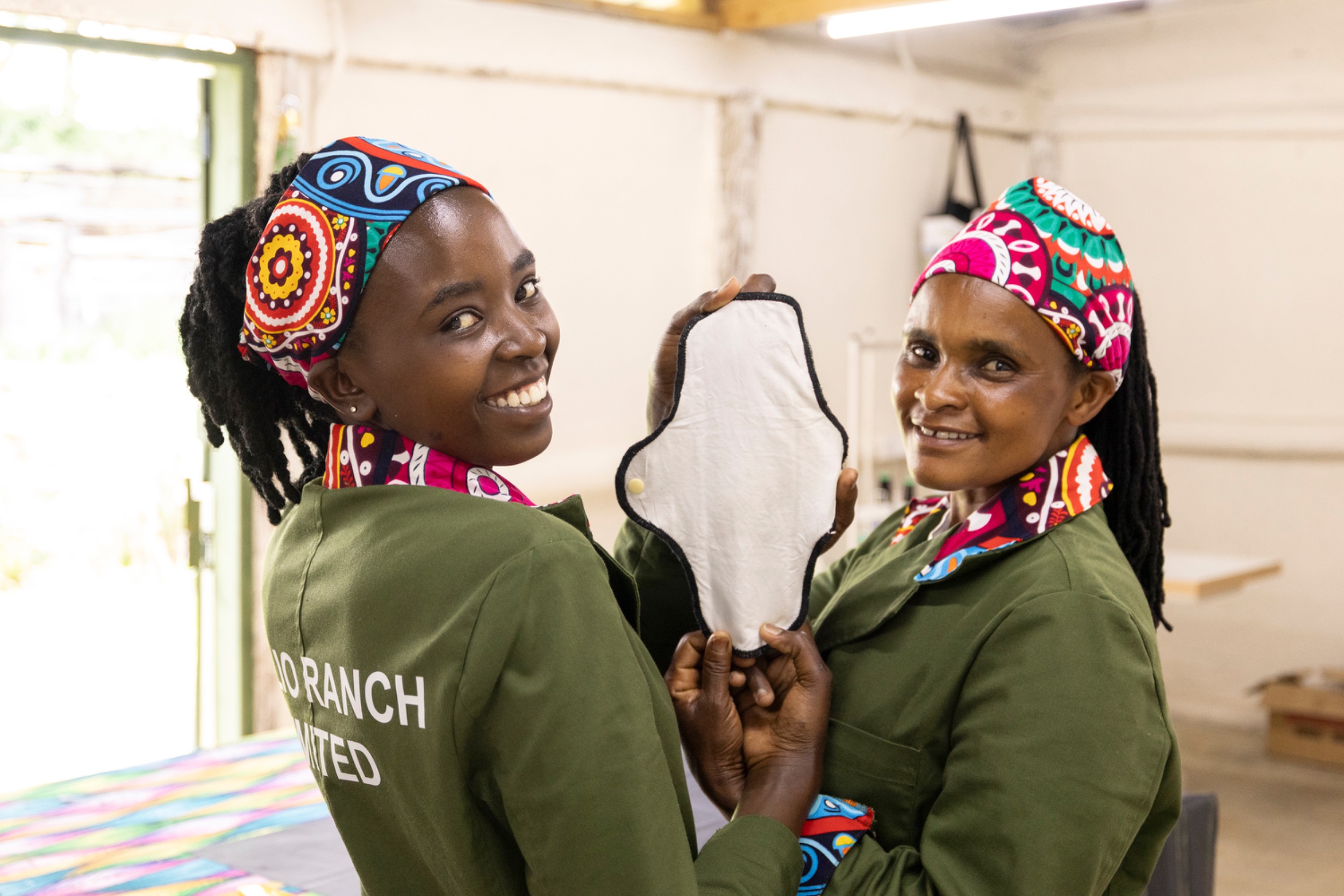
Earning her own income.
Being able to contribute to her children's school fees and support her family through her own work.
And then taking what she has learned and passing it on to another woman.
Solio created the project to provide women from surrounding communities with skills, opportunities to earn an income and greater independence. The products they make help support both the project and the women themselves.
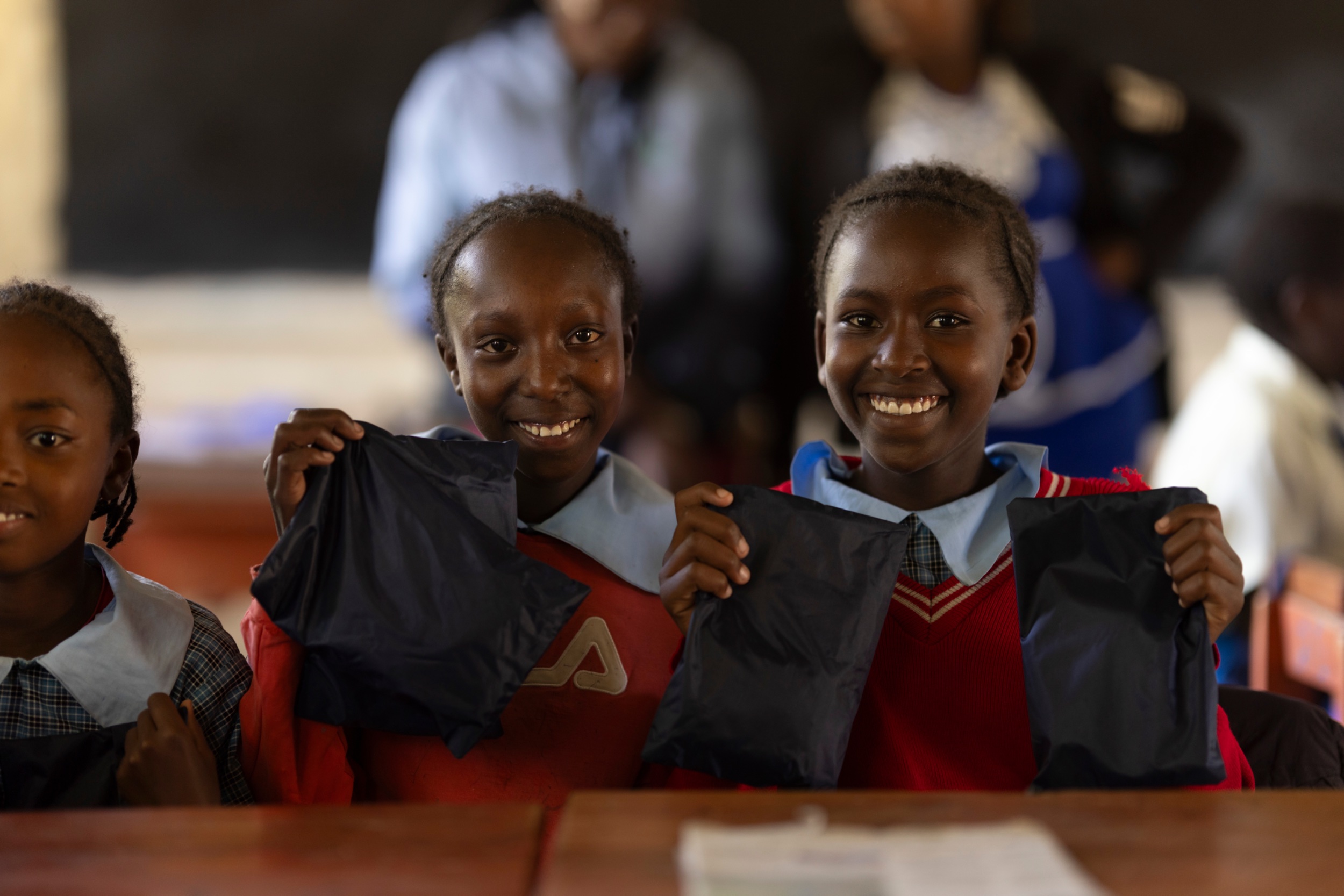
The kits are donated to local schools, helping girls manage their periods safely and with dignity. Without reliable access to menstrual products, girls can miss school simply because they have their period. The project helps give them the possibility to keep attending.
The women also go to the schools and speak with the girls about menstruation and women's health.
And this is where the Women's Empowerment Projects stop being simply a name written on a building. They become very real.
It became personal
But when you spend time there, you stop thinking about the project in those terms.
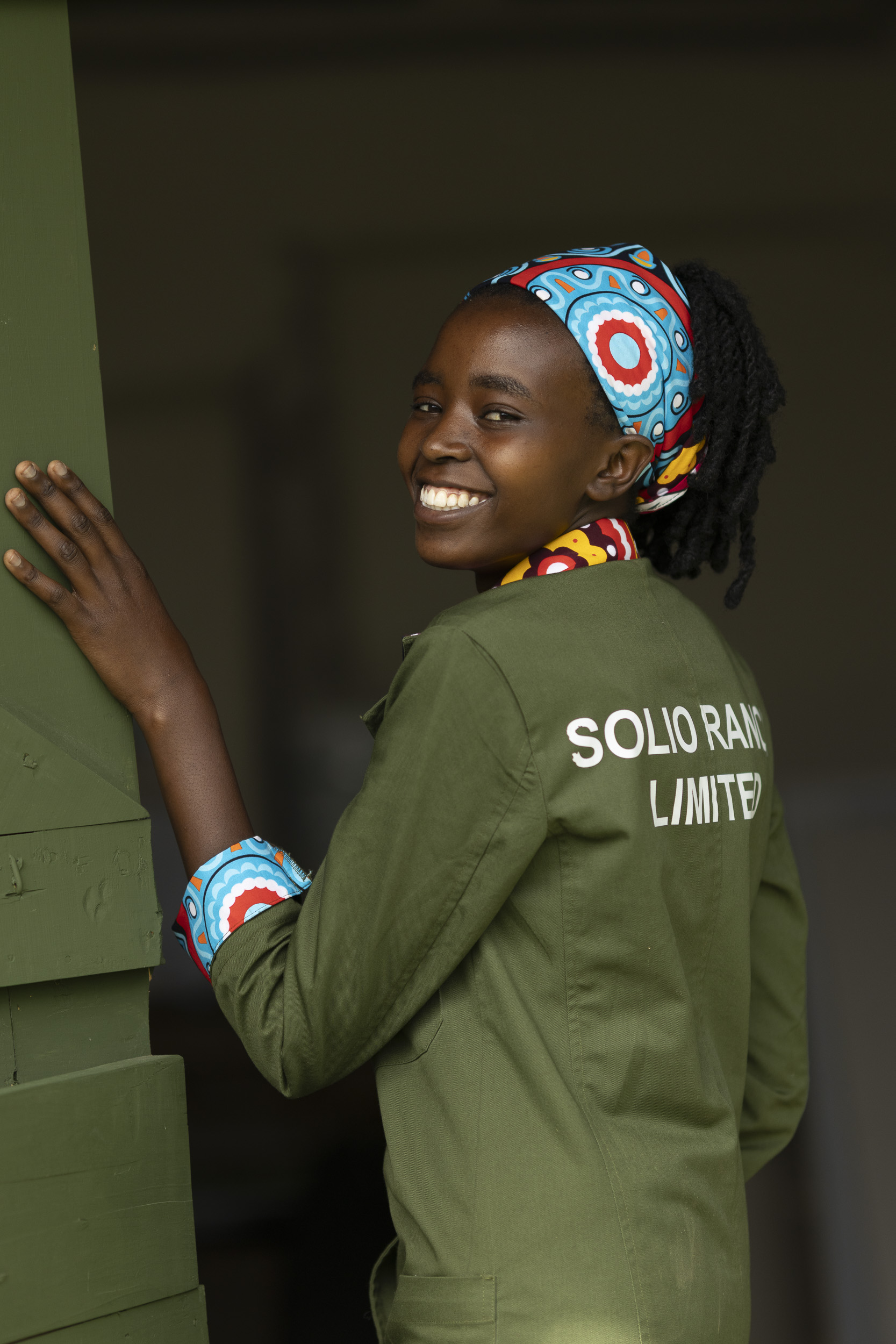
You start knowing the women.
These women have become incredibly important to me.
When I arrive at Solio, it doesn't take long before I want to walk down and see them.
I want to know how everyone is doing.
What they are making now.
Who has joined.
What has changed since the last time I was there.
And inevitably, there is a lot of laughing.
A lot.
Not strangers
Working as a photographer with them feels incredibly easy now because we know each other.
There isn't that uncomfortable moment where I arrive as a stranger, point a camera at someone and expect them to suddenly relax and be themselves.
We've already talked.
We've already laughed.
We've spent time together.
They share parts of their daily lives with me and trust me with their stories, and that means a lot to me.
So when I eventually pick up my camera, I'm not photographing strangers anymore.
I'm photographing women I know.
Then the photographs came back.
On my last trip, I had the honour of creating photographs for the Women's Empowerment Projects.
Afterwards, Solio printed 23 of my images to hang on the walls of the building.
Seeing them there for the first time was incredibly special.
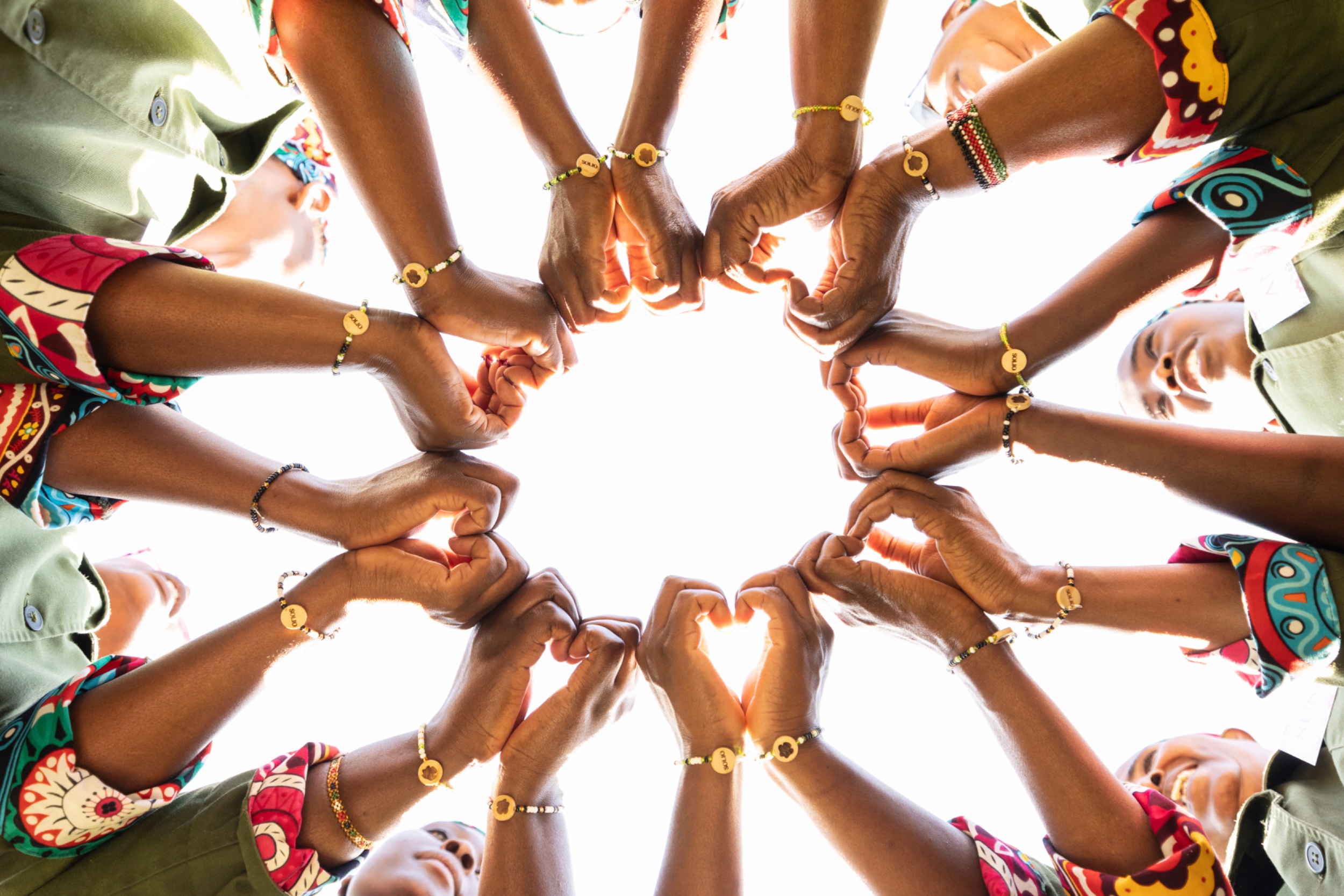
Their hands.
Their work.
Their smiles.
All around the space they had built together.
These weren't photographs from one afternoon.
They came from all the time we had spent together. The work, the conversations, the little moments in between and, of course, all the laughing.
And the best part was seeing how happy the women were about them.
I felt incredibly honoured.
Not because my photographs were hanging on a wall, but because their story was.
And when I look at those photographs, I don't only remember taking them.
I remember everything around them.
The talking.
The laughing.
The time we spent together.
And now the walls do too.
community means to me.
Not arriving somewhere, taking photographs and leaving again.
It's coming back.
Sitting down.
Listening.
Remembering what somebody told you the last time.
Laughing about something that has absolutely nothing to do with the work.
Watching someone learn something new.
Seeing the group grow.
And eventually realising that the people you originally came to photograph have become people you're simply excited to see again.
I am incredibly grateful that I walked into that room for the first time.
And I know that whenever I drive through the gates of Solio again, it won't take very long before I find myself walking down there to see the women.
Probably with my camera.
But definitely not only because of it.