Two Nights
at Umani
I went to Umani wanting two quiet days at the end of a long trip. Instead, I got to see what happens after the Nursery.
The plan
After spending almost a month in Kenya, I decided that the end of my trip should be a little more relaxed.
At least that was the plan.
Of course, I still had my cameras with me. I wasn't going to spend two nights somewhere this special without taking photographs. But this time, I was also looking forward to slowing down a little.
A pool.
Good food.
No work planned.
Maybe even something that resembled a holiday.
There was just one small problem with that idea.
I am always craving animals.
So Umani Springs seemed like the perfect choice.
There was another reason I wanted to go.
I had been Kamili's foster parent through the Sheldrick Wildlife Trust for years and had last seen her at the Nairobi Nursery. Since then, she had moved to Umani.
Umani Springs Reintegration Unit was created in 2014, particularly with some of Sheldrick Wildlife Trust's more vulnerable and physically compromised orphaned elephants in mind. The Kibwezi Forest provides food and water throughout the year, making it an ideal environment for elephants who might struggle to travel the long distances required in drier areas.
Here, the elephants can gradually become more independent, spend their days in the forest, meet wild elephants and find their own way back to a wild life, while still having the support and protection of the keepers for as long as they need it.
Some still return to the stockades at night.
Others are already spending more and more time out in the wild.
There is no deadline.
They find their way in their own time.
And for two nights, we were going to stay right there.
Our little home in the forest
Umani Springs itself feels almost unreal.
There are three beautiful cottages surrounded by the forest, with outdoor showers and wonderful views. There is a swimming pool, and the main area has a large dining table, a fireplace, comfortable places to sit and pretty much everything you could wish for.
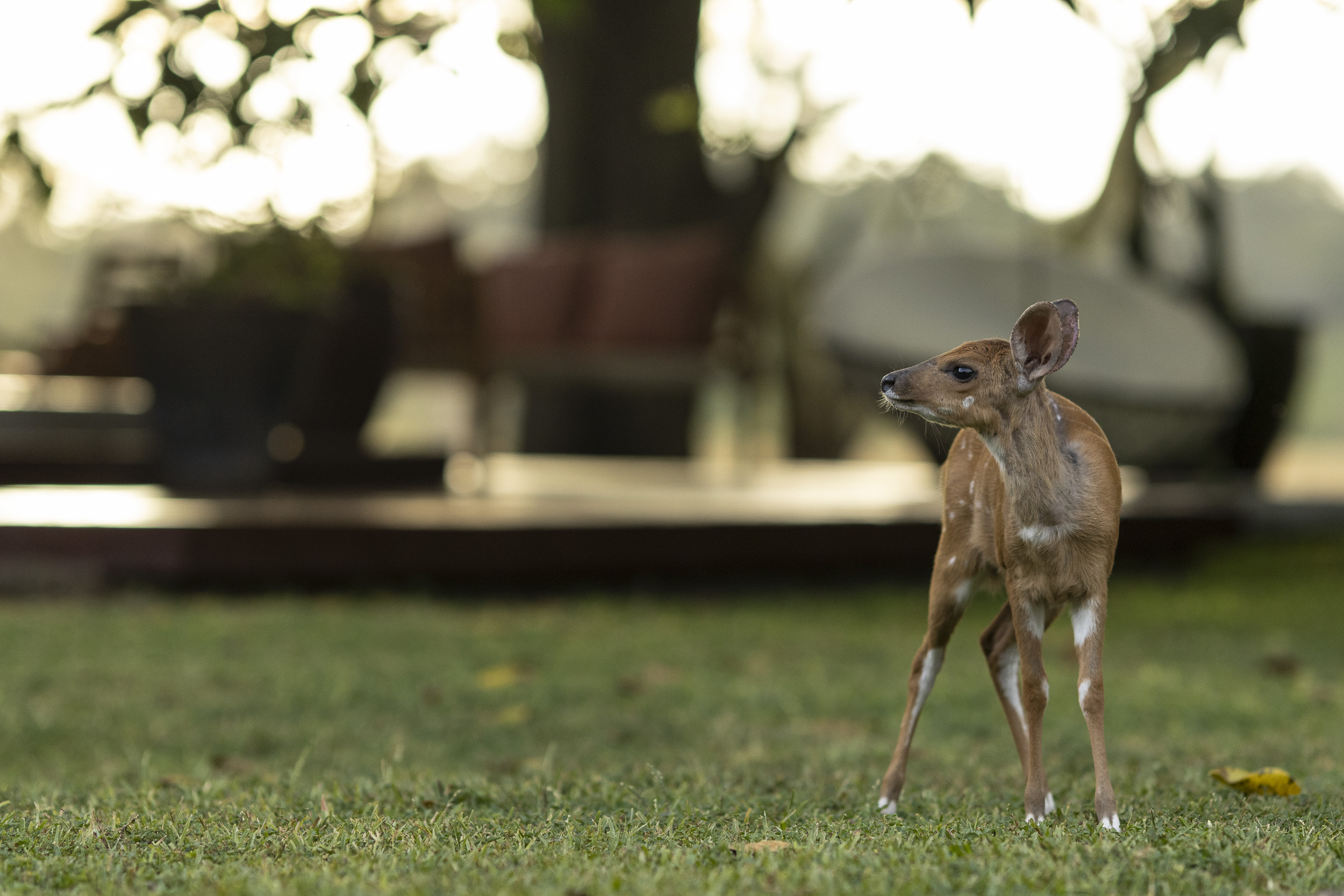
Bushbucks wandered around us.
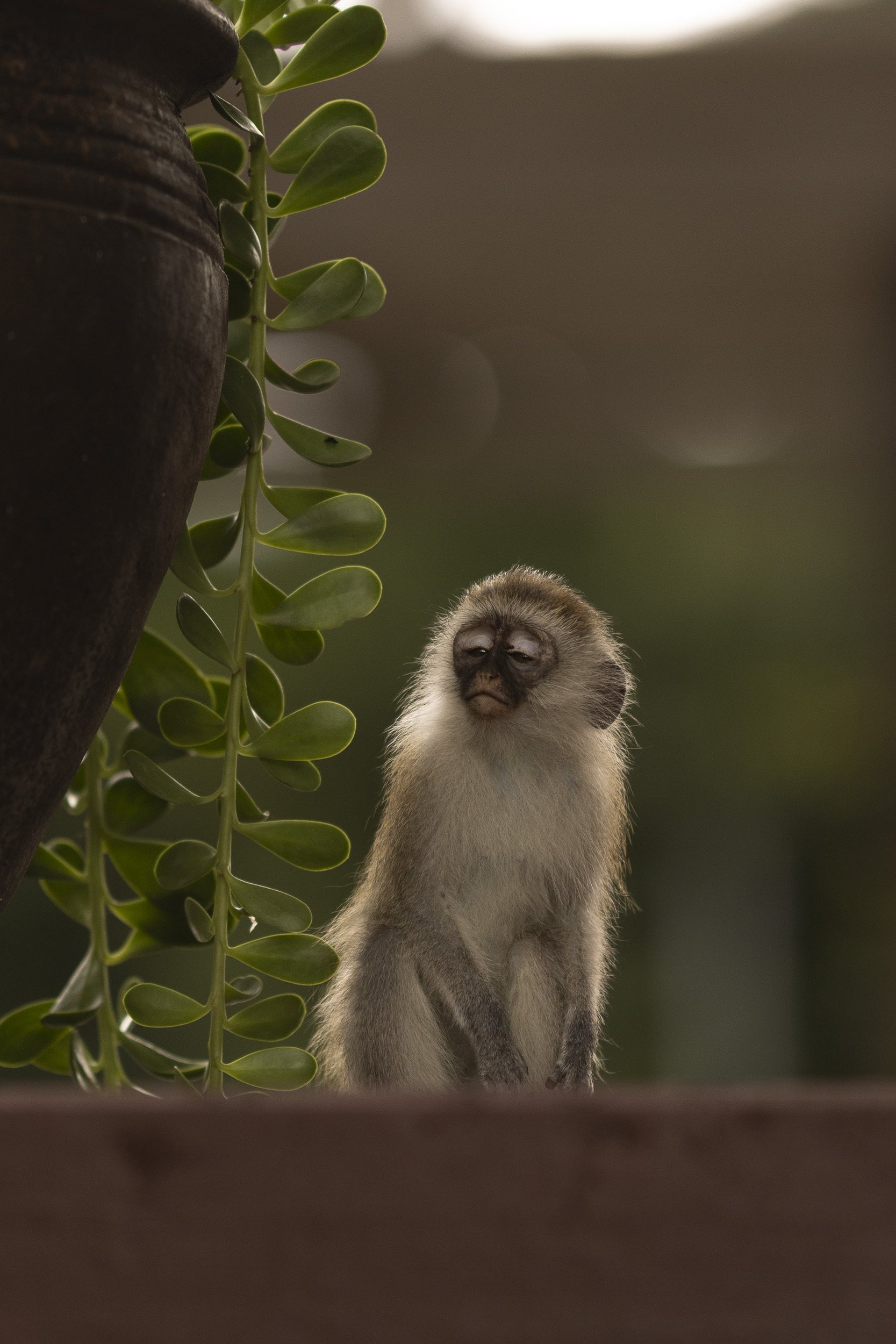
Vervet monkeys appeared in the trees.
The animals were so relaxed around the camp that at times it felt a little like being in a Disney movie.
And then I discovered one of my favourite things about Umani.
When you book the camp, it is exclusively yours.
No other guests suddenly appear for dinner.
It's just you, your family or friends, the staff and the forest around you.
We had bought our groceries in Nairobi and brought everything with us.
I wasn't quite sure what to expect from our supermarket shopping once it reached the kitchen.
Apparently, I shouldn't have worried.
The chef somehow transformed it into beautiful curries, amazing salads with grilled halloumi and meals that were far better than anything I imagined while we were throwing ingredients into our trolley in Nairobi.
So far, the relaxing part of the trip was working perfectly.
And then the elephants arrived.
Eleven o'clock
Rolling in the mud.
Playing with each other.
Splashing everywhere.
We had made it just in time for the midday mud bath.
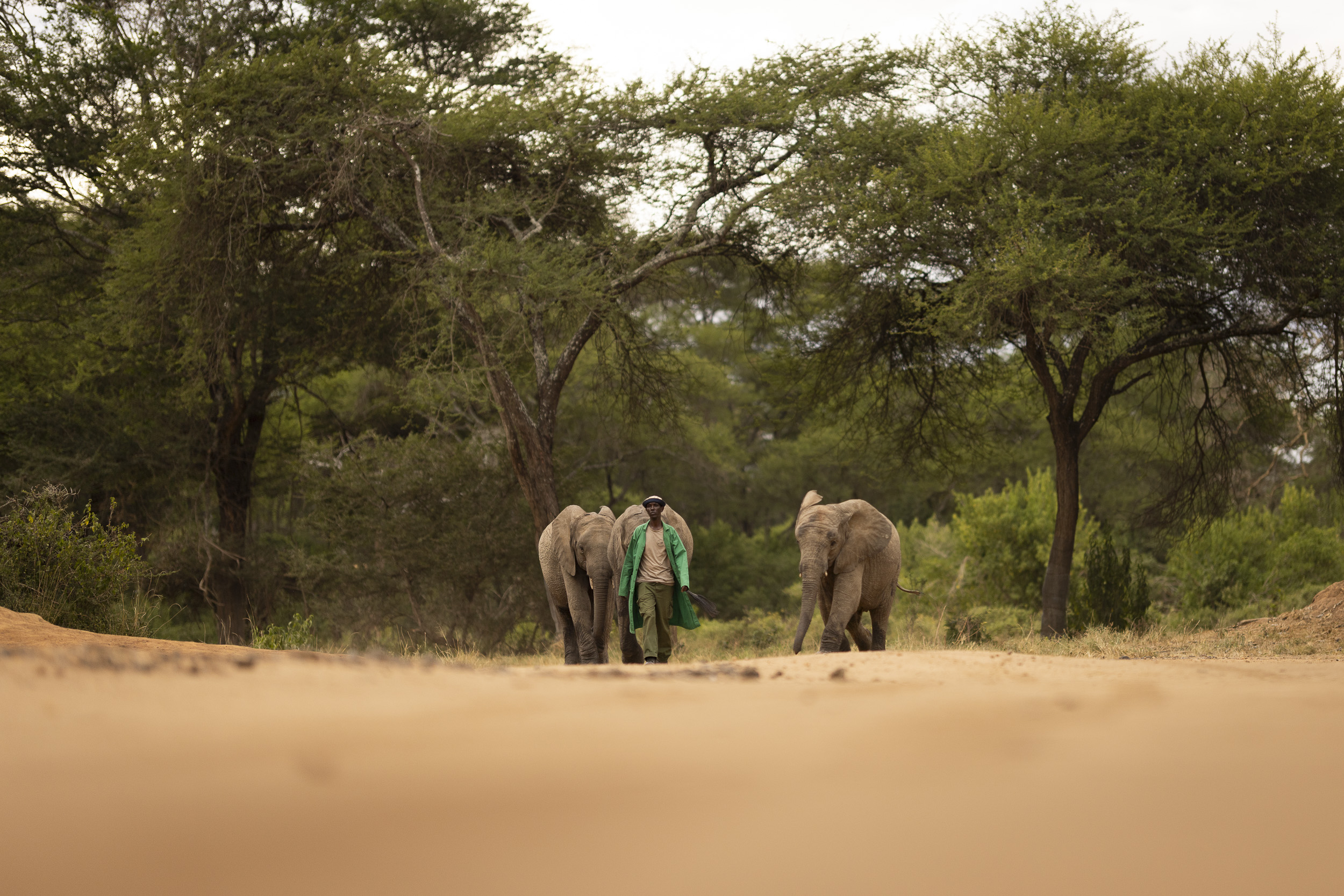
A whole herd walking towards us. And they knew exactly what was waiting for them.
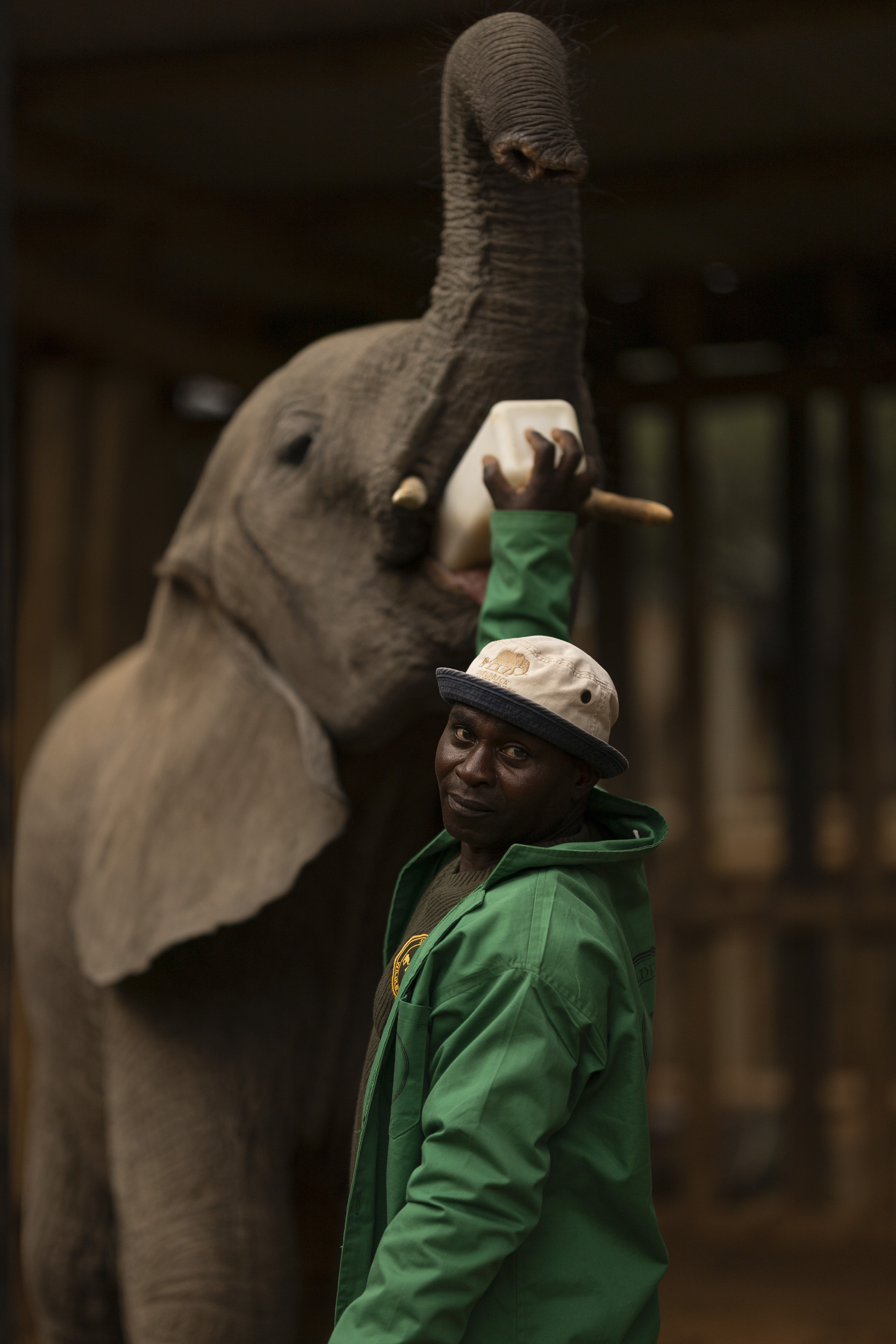
Milk.
Once the bottles were finished, the serious business was over.
And the splashing began.
There is something about watching elephants enjoy water that makes it impossible not to be happy.
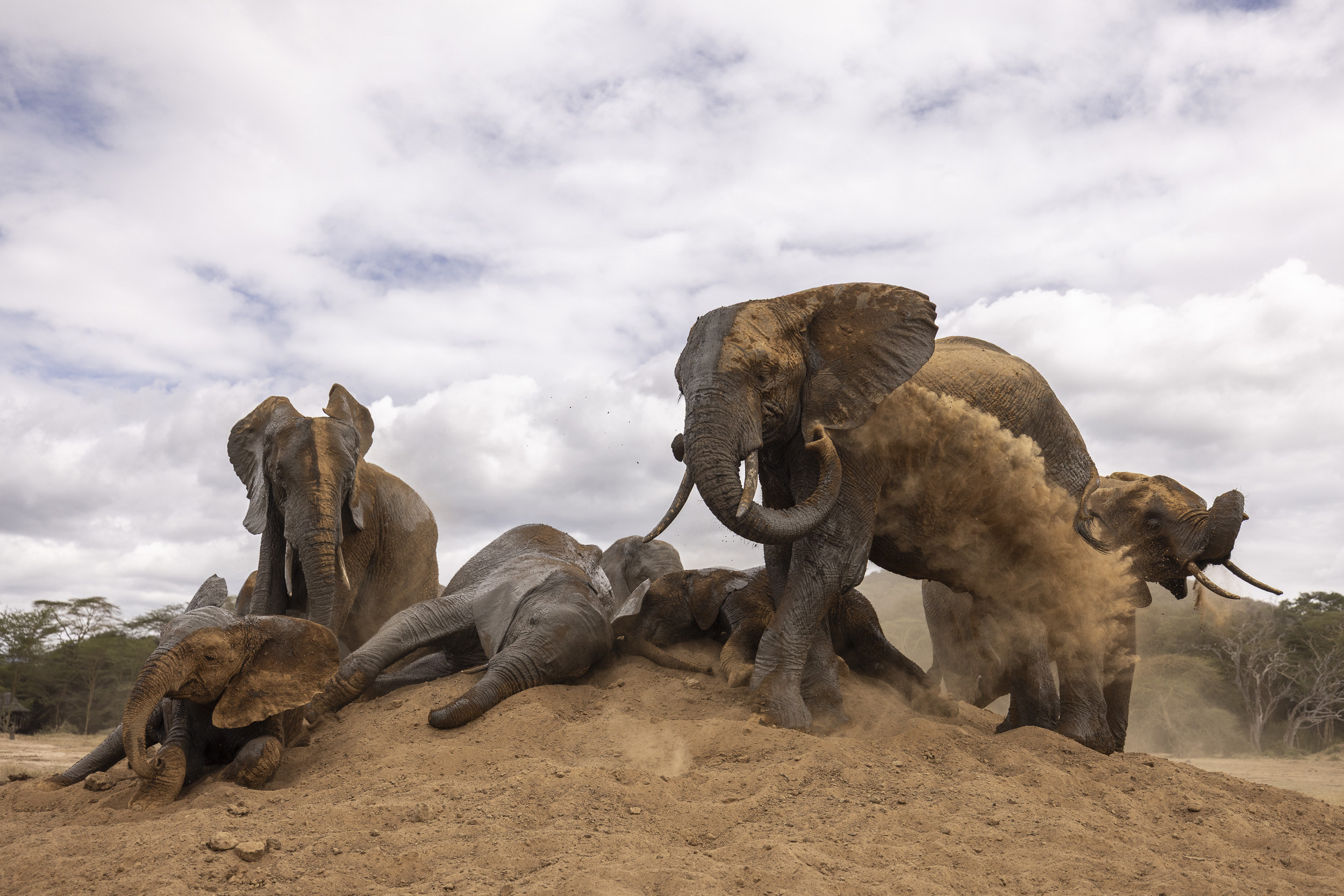
When they were finally finished, they moved towards the sandy area.
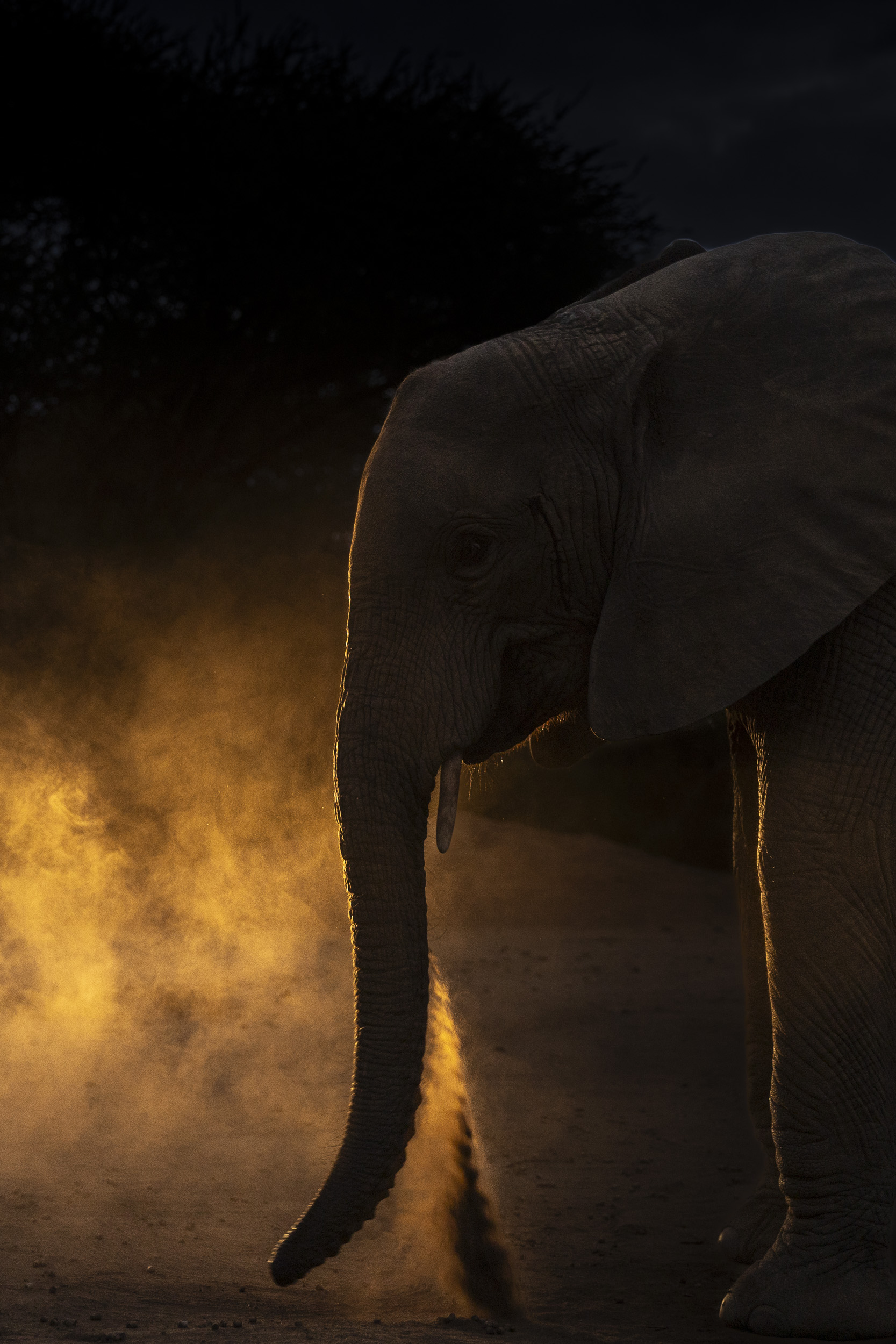
Then came the dust.
Trunks throwing it over their backs. Elephants lying down. Playing. Resting.
And us standing there, unbelievably close to all of it.
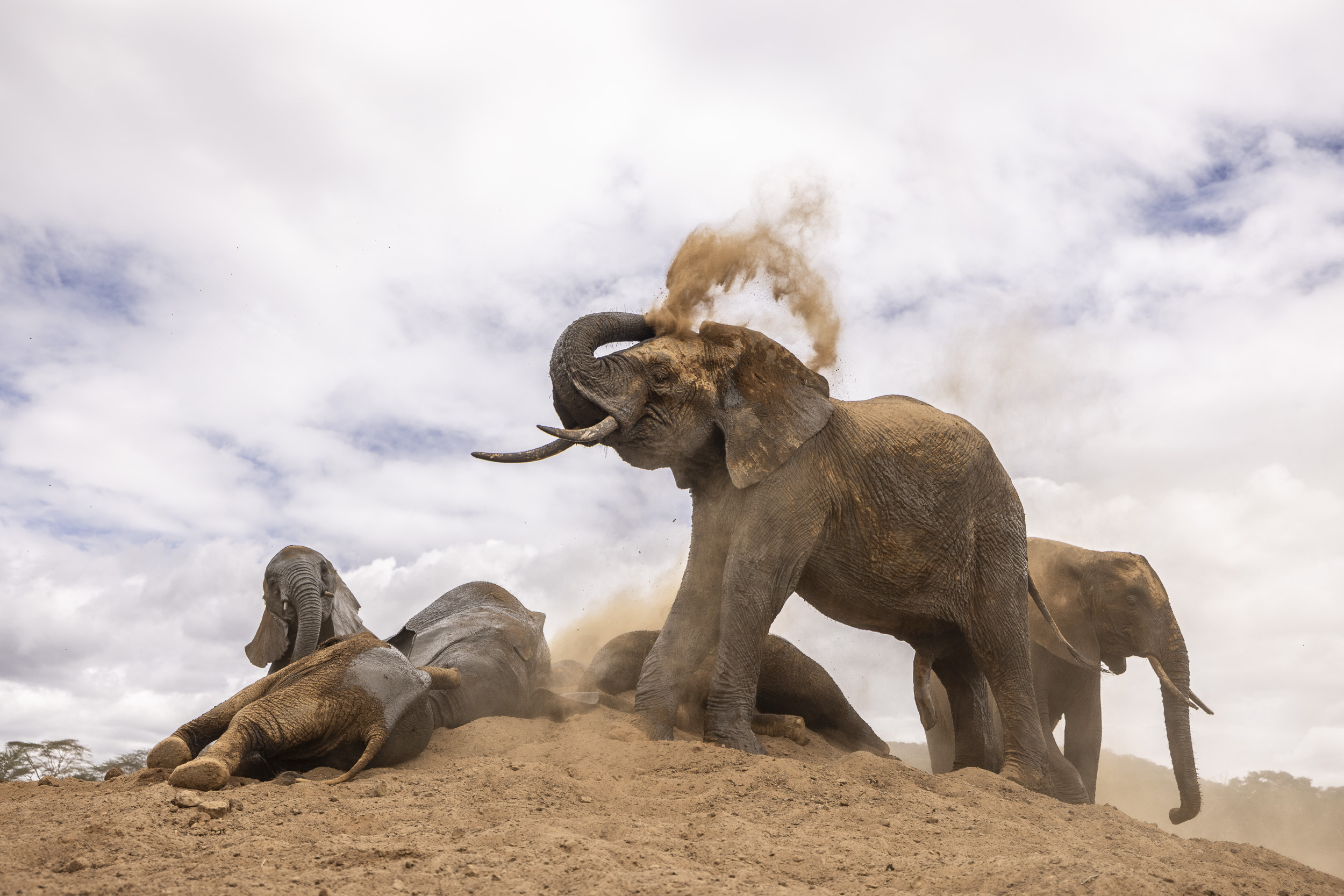
The keepers told us who was who.
Their stories.
Their personalities.
The little details that help them recognise each elephant and understand how they behave.
Some were completely focused on what they were doing.
Others were a little more curious about us.
But always in that wonderfully gentle elephant way.
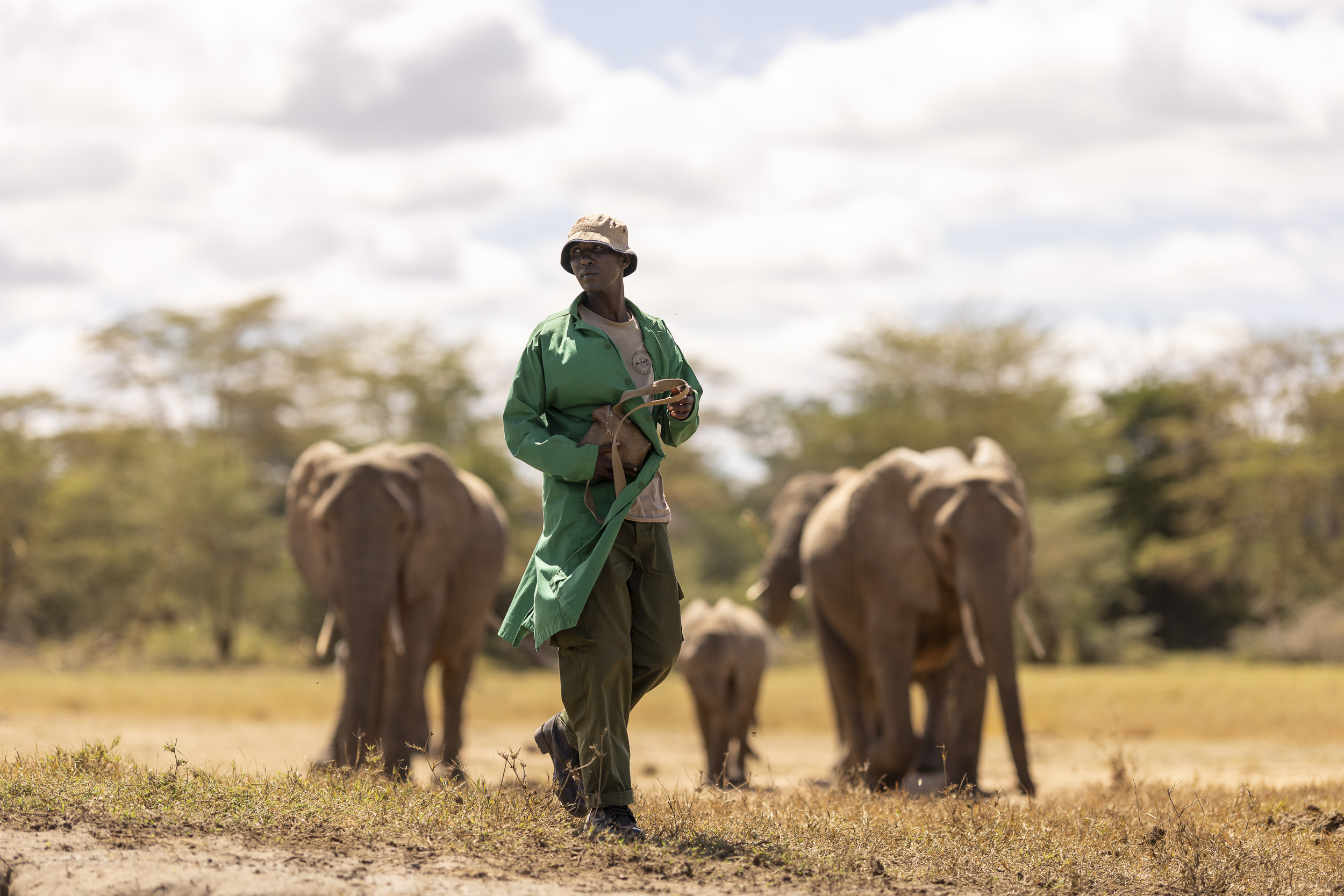
With elephants everywhere, moving around, drinking, playing and throwing dust, I didn't recognise her immediately.
Luckily, one of the keepers knew exactly who I was looking for.
He kept pointing Kamili out to me and eventually brought me directly to her.
And suddenly there she was.
I could stand beside her and touch her. The keeper even took my camera and photographed the two of us together.
It was such a simple moment, but incredibly special to me.
For years, Kamili had been an elephant I followed from afar. I had supported her, read her updates and seen her at the Nursery in Nairobi.
Now I was standing beside her in the Kibwezi Forest.
She obviously had no idea who I was.
But that didn't matter.
And seeing her there, surrounded by the herd and living this completely different chapter of her life, made me incredibly happy.
Eventually, spa time was over.
The elephants disappeared back into the forest.
And suddenly everything was quiet again.
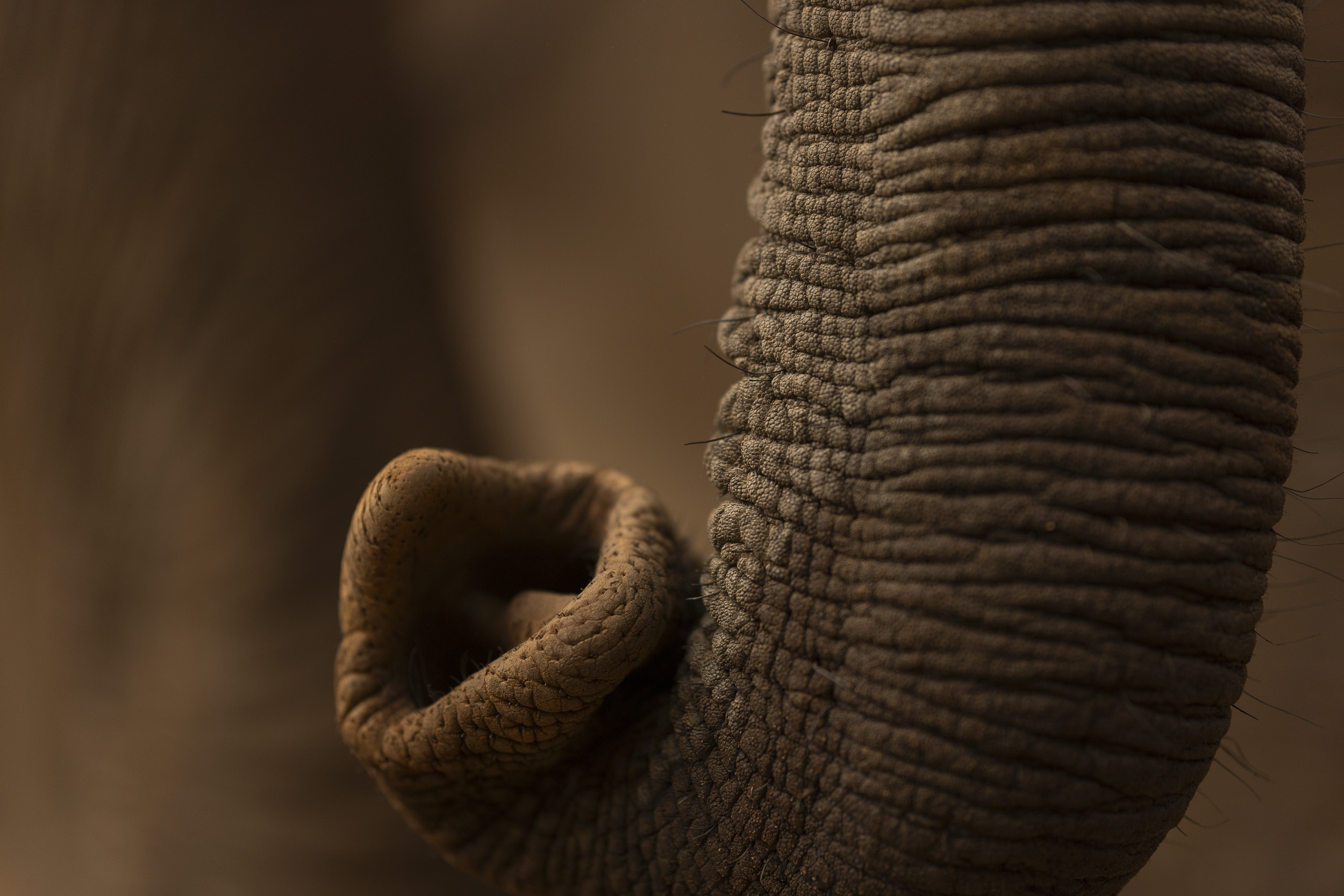
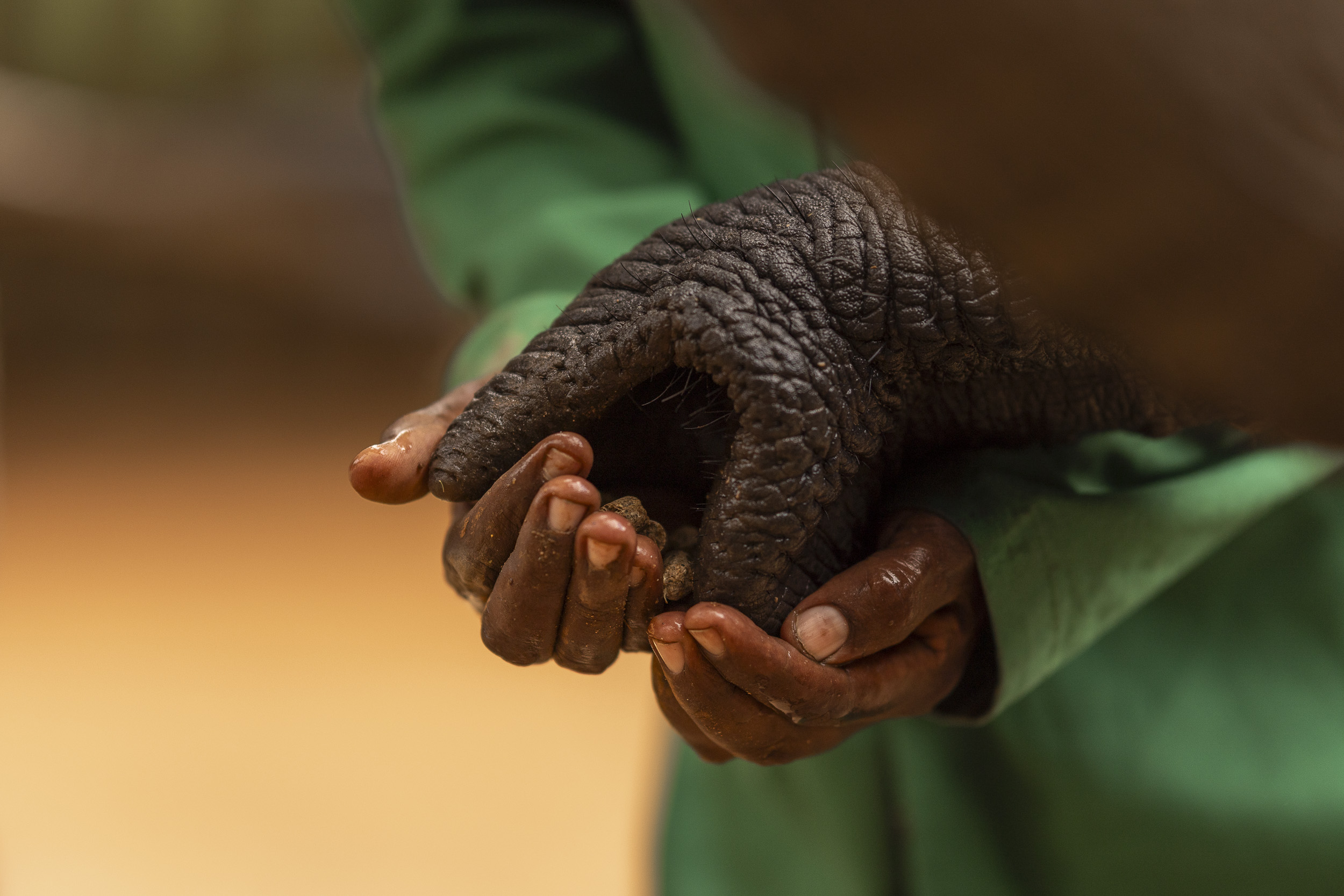
Lunch. Pool. Wait for elephants. Repeat.
We went back to the camp for lunch and finally did some of the relaxing I had promised myself.
But by evening, there was only one place I wanted to be.
Back with the elephants.
The evening visit took us to the stockades.
The elephants returned from the forest for their milk and pellets, and the whole atmosphere had changed again.
The light became golden.
They wandered around looking for pellets while the keepers moved among them.
Some of the elephants still slept in the protection of the stockades, while others were already free to spend their nights outside, another step in the gradual process of returning to the wild.
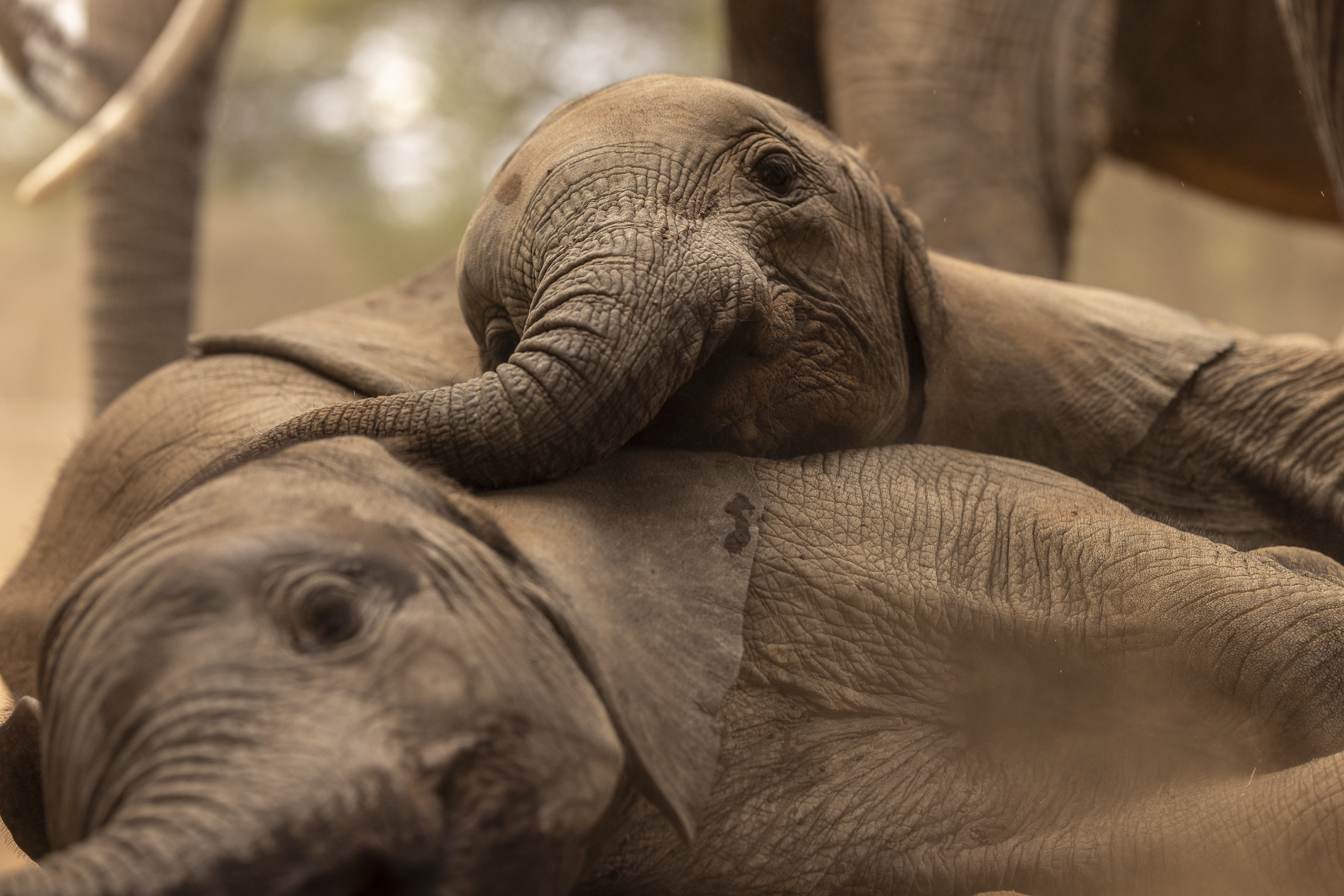
Two of them playing.
A keeper standing beside an animal he has known and cared for.
The tiny gestures between them.
For a photographer, it was difficult to know where to point the camera.
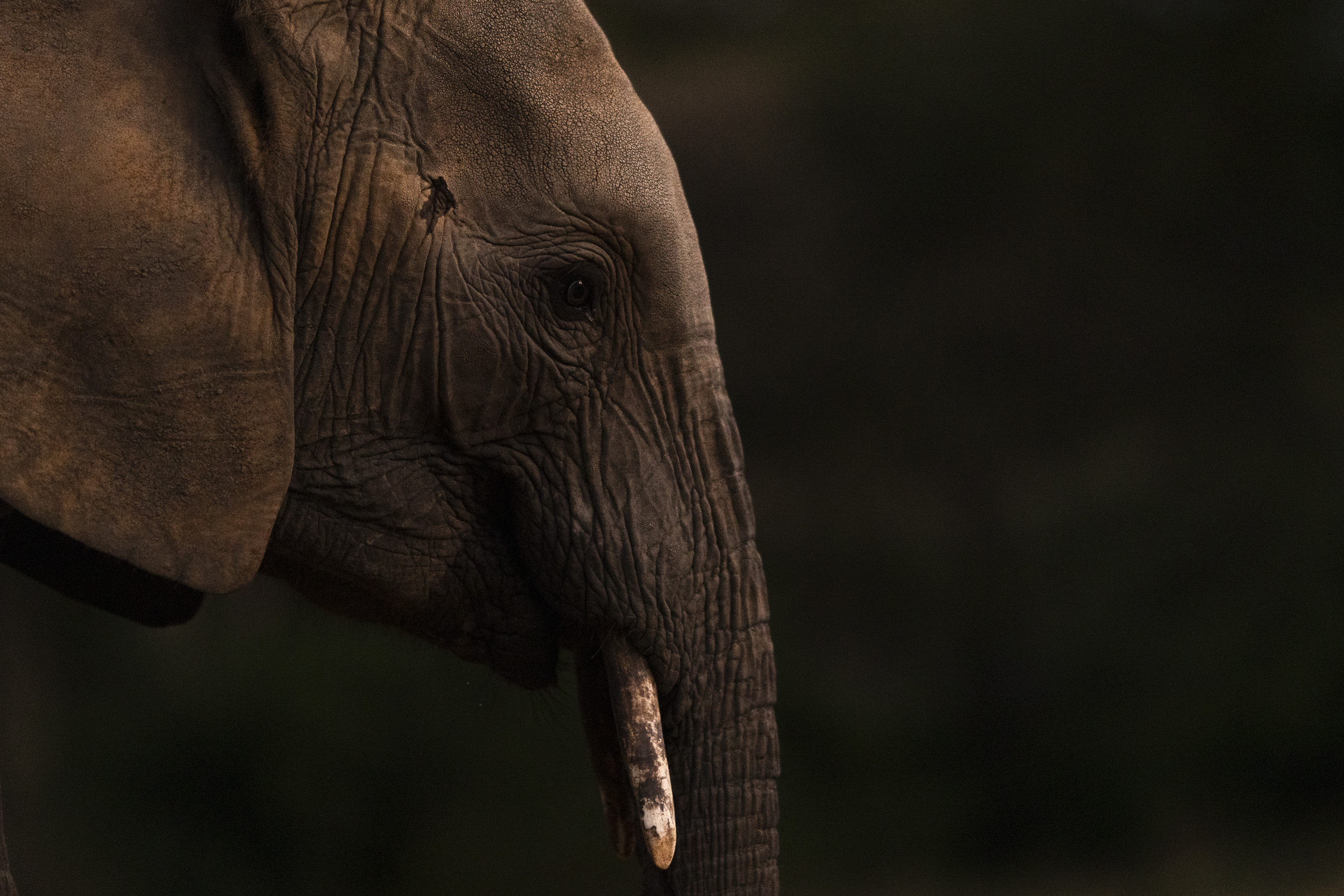
Elephants are incredibly beautiful to photograph on their own.
But what fascinates me even more are the interactions.
Those are the moments I look for.
Eventually, our time was up.
We went back for dinner and to bed, already excited about doing it all again the following morning.
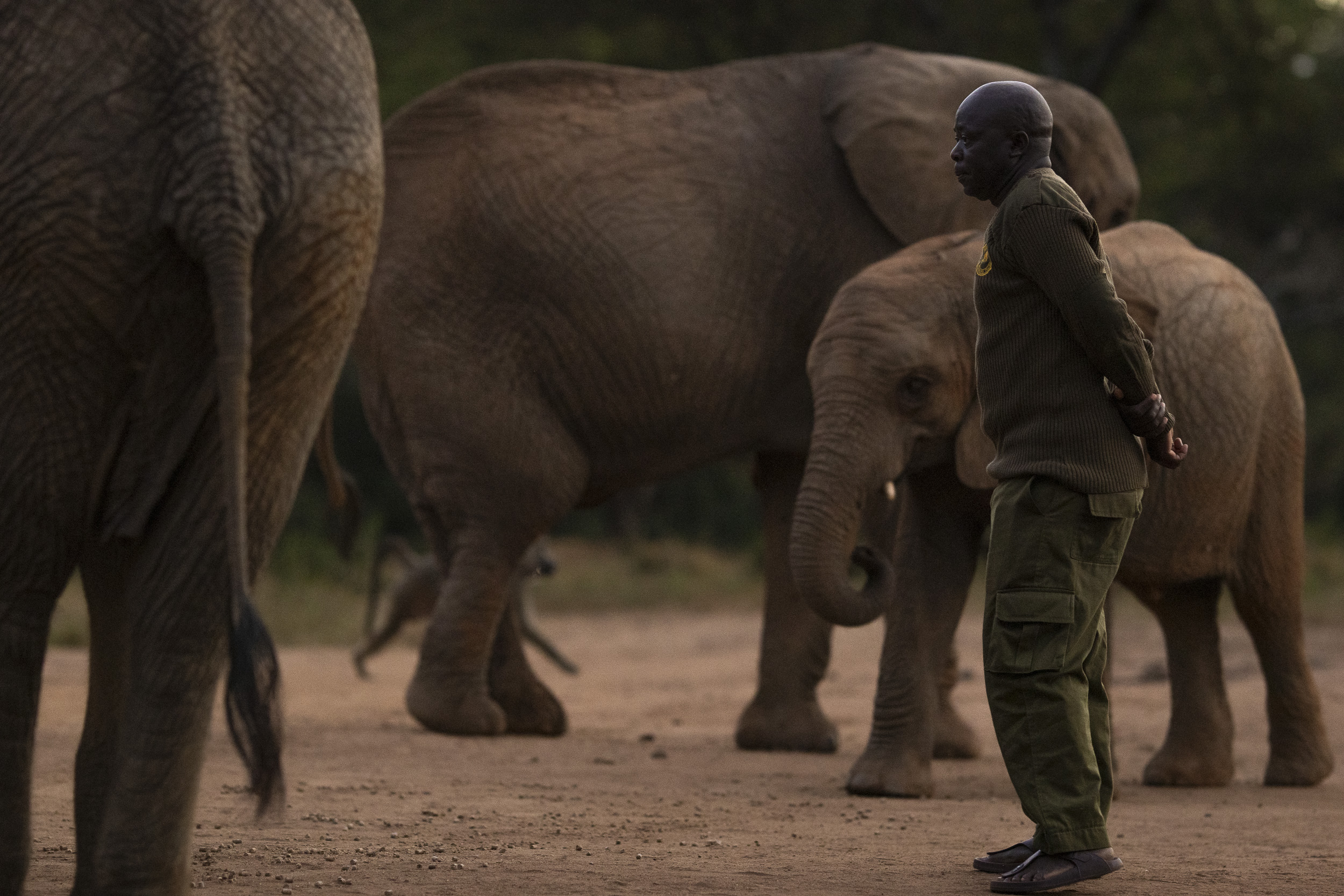
Morning came quickly
And it was milk time again.
The elephants arrived for their bottles and pellets before another day in the forest began.
We spent more time around them, watching them eat, interact and slowly get ready to leave.
There was something I loved about this routine.
Nobody was trying to keep them there for us.
When they were ready, they could go.
And eventually they did.
One by one, they disappeared back into the green.
The others
When you stay in one place long enough, you start noticing everything else.
One morning a wild elephant came through the vegetation near us. Not one of the orphans. Just an elephant passing through, on his own way.
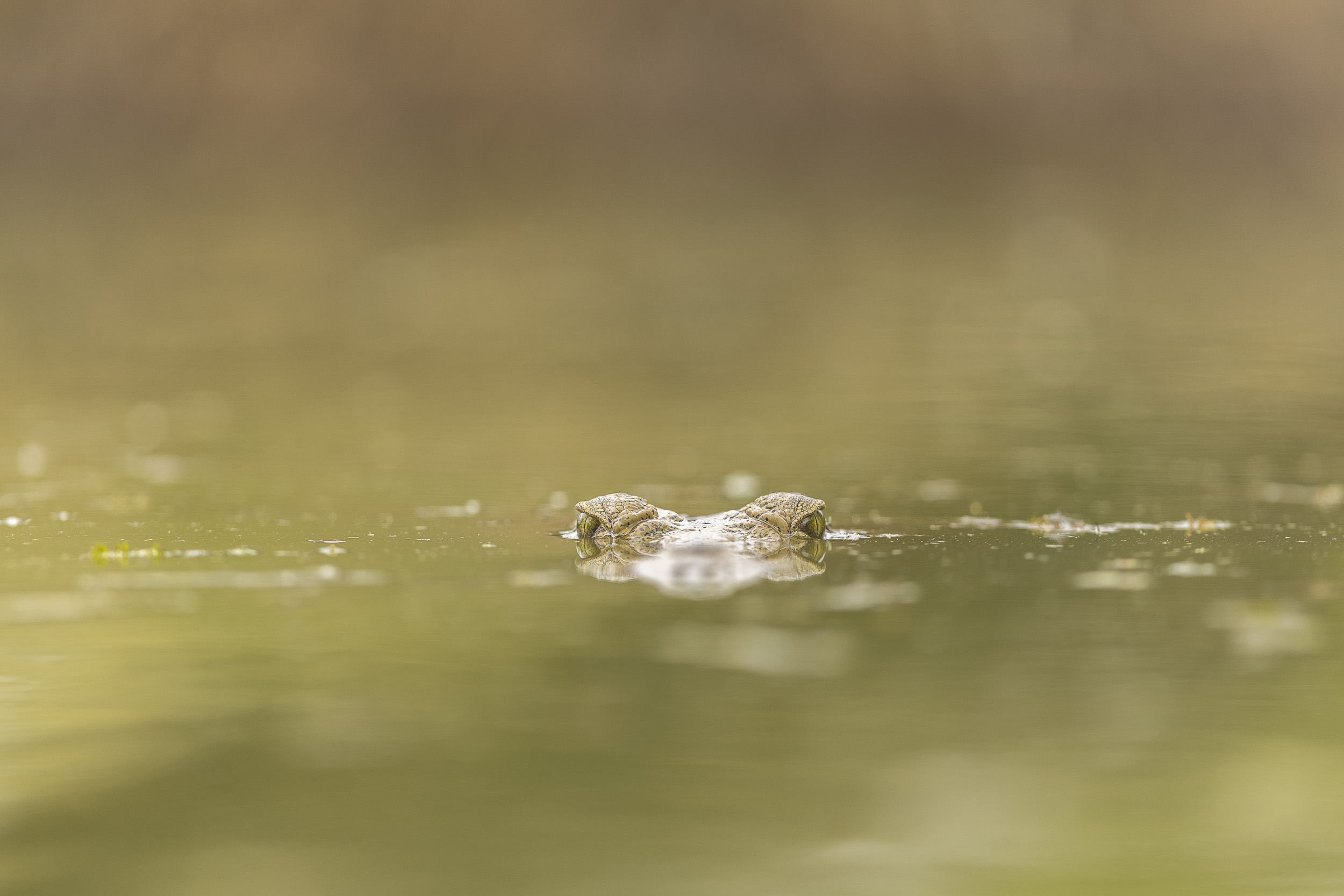
There was a crocodile in the water below the camp. The house croc, as everyone there calls him.
A young bushbuck grazed on the grass by the cottages as if we weren’t there.
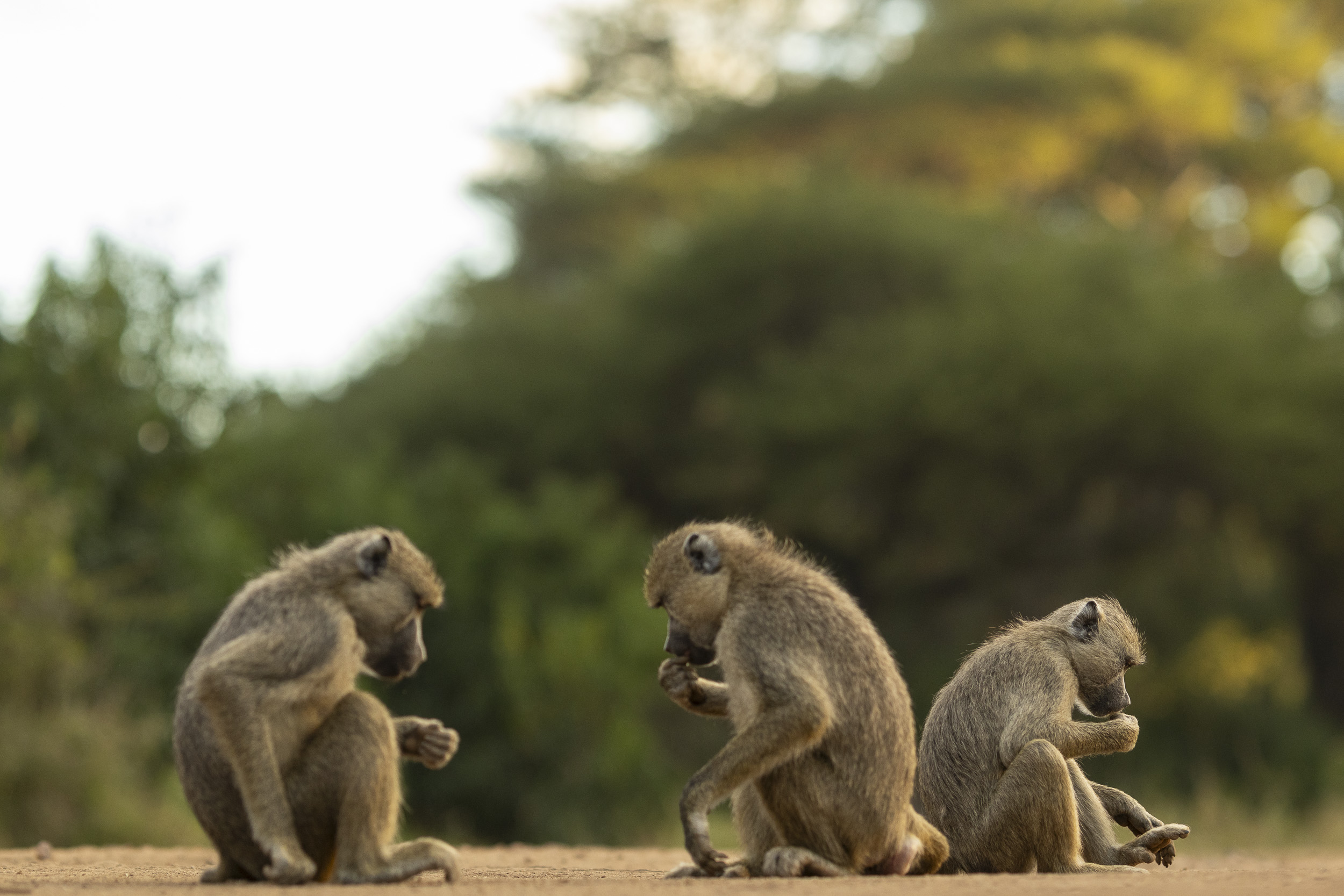
And once the elephants had finished and gone back into the forest, the baboons arrived to deal with whatever pellets were left behind.
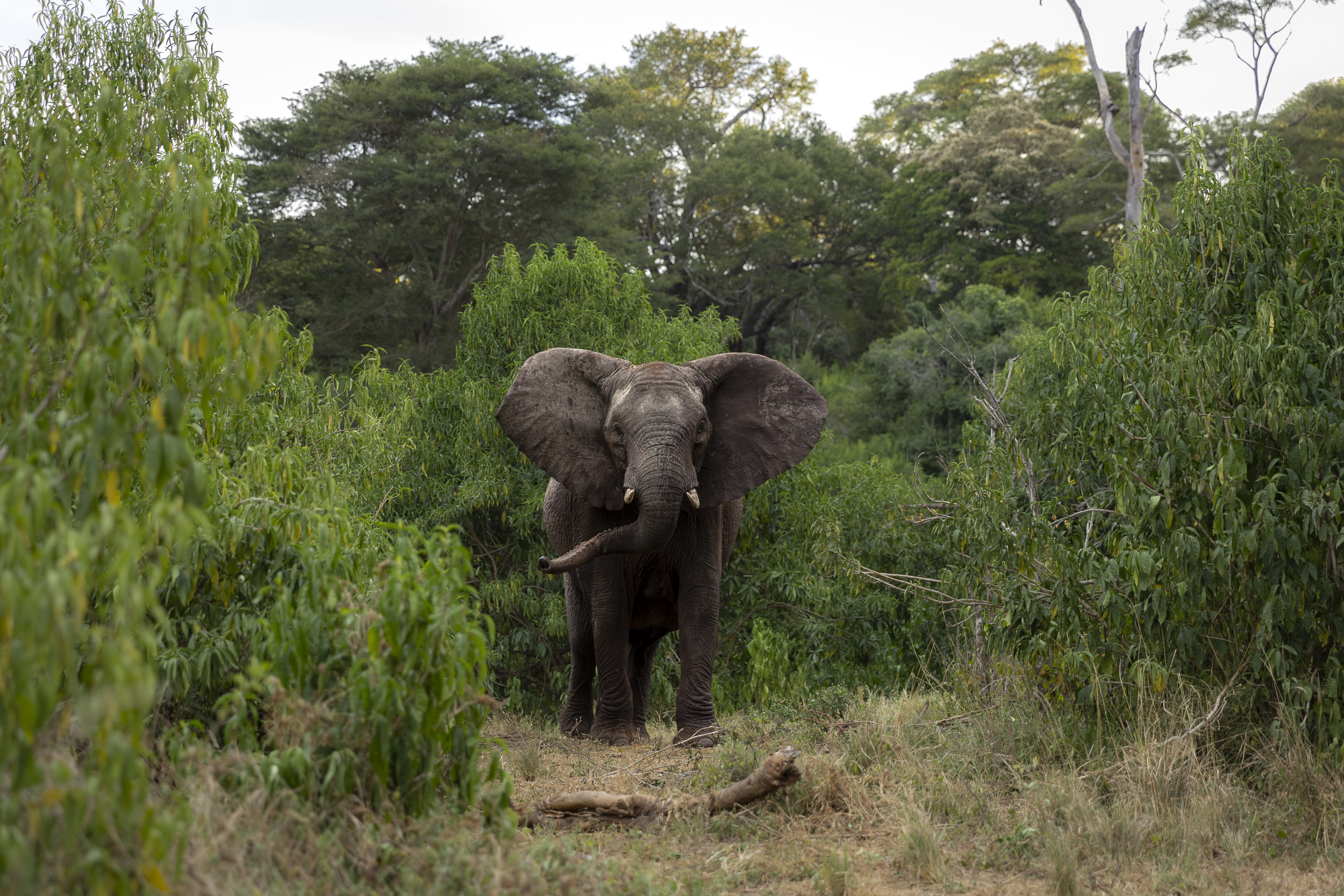
Not holding them back.
Just giving each elephant the time it needs to find its own way.
That is the whole point of Umani.
And somewhere in that herd was Kamili.
No longer the elephant I remembered from the Nursery, but one finding her own way towards a wild life.
Maybe that was the most beautiful part of seeing her again.
Two nights wasn't enough
I had chosen Umani because I thought it would be a beautiful way to slow down after almost a month in Kenya.
And it was.
We ate wonderful food. Sat by the pool. Watched bushbucks wander past. Listened to monkeys in the trees.
For once, I even managed to have something resembling a holiday.
But, unsurprisingly, the moments I remember most are the ones with the elephants.
The mud.
The dust.
The golden evening light.
The keepers telling us their stories.
Finding Kamili among the herd.
And watching elephants who once needed around-the-clock care slowly learn to live on their own terms.
I went to Umani wanting two quiet days at the end of a long trip. Instead, I got to see what happens after the Nursery.